🎉 Exciting News! Start with just a 10% deposit and choose a delivery date in 2026 to pay the rest. Flexibility made easy!

The First Year With Teak Garden Furniture: What to Expect

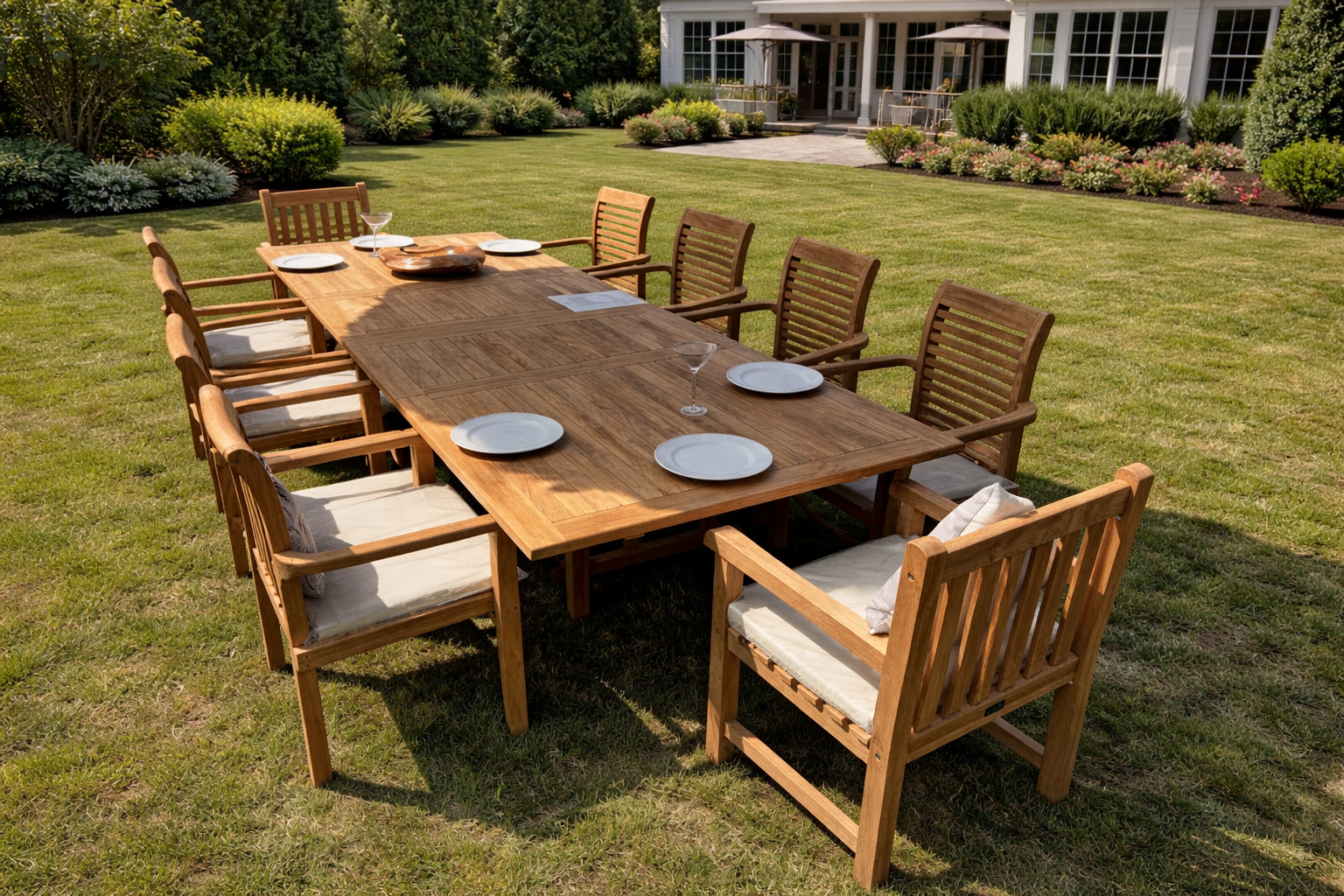
Most guides about teak garden furniture talk about decades. Fifty-year lifespans. Park benches that outlast the people who sat on them. That is all true, and I have written about it myself. But it is not what a new owner actually wants to know in the first twelve months.
What they want to know is simpler. The set has just been delivered. It looks beautiful. Now what? What is going to happen to it between now and the same time next year? What is normal? What is a problem? When should they start worrying, and when should they just leave it alone?
I have been delivering teak garden furniture to UK customers for more than a decade, and I have had the follow-up calls too. The anxious email in week three about a tiny crack. The call in November asking whether the colour change is a warranty issue. The message in February asking if something has gone wrong because the wood suddenly looks grey.
None of those things were problems. But nobody had told the owners what to expect, so they thought they were.
This is the guide I would have liked every one of my customers to read the day their furniture arrived. It walks you through the first full year of ownership, month by month, so you know what is coming and what it means.
Day One to Week One: The Arrival and the First Few Days
The first thing to say is that teak furniture does not look its final self the day it arrives. It looks like its most photogenic self. It has been packed in a warehouse, usually in Indonesia, shipped over, unpacked, and placed in your garden all within a short window. The wood is still adjusting to British air.
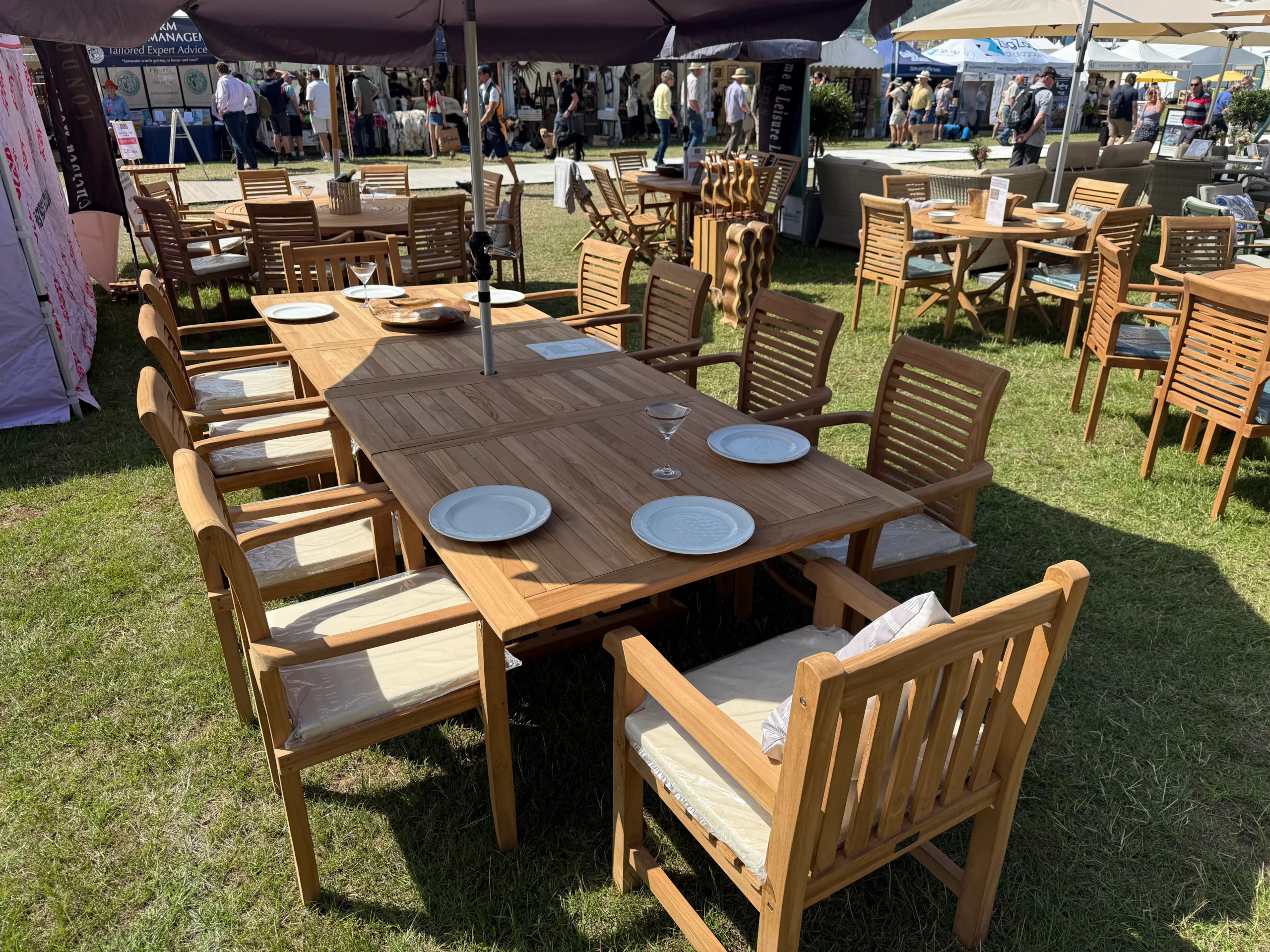
When you first unwrap a dining set, the colour is typically a warm, rich golden brown. The grain is clean and bright. If you run your hand across the surface, it feels smooth and faintly oily. That oiliness is the natural oil content of the heartwood, and it is what gives teak its weather resistance. It is a good sign.
Over the first week, you may notice the surface begin to look very slightly matte as the top layer of oil starts to oxidise in contact with the air. This is entirely normal. The wood is simply starting to live outdoors. You do not need to do anything about it.
What I always tell customers in week one is this: use the furniture. Do not treat it as something precious that has to be covered every evening. Sit at the table. Spill things on it, clean them up. Let it rain on it. The furniture is built for this. The sooner it starts behaving like outdoor furniture, the better it will settle in.
If you want to understand the wood itself in more depth before you start, the teak wood guide on our site covers what the material is actually doing when it is exposed to air for the first time.
Weeks Two to Six: The Adjustment Period
This is the phase where most of the worried calls come in, and it is worth explaining why none of them need to.
Teak is kiln-dried before it leaves the factory, which means the moisture content of the wood has been brought down to a controlled level in a heated environment. When the furniture is then unpacked in a British garden, the wood is suddenly in a completely different climate. Our humidity is different. Our temperature range is different. The wood reacts.
Surface Checking: The Thing That Worries Everyone
The most common reaction is something called surface checking. These are fine, shallow lines that appear on the surface of the wood, usually across the grain, as the timber adjusts to its new environment. They look like small cracks, and that is why people panic.
They are not cracks in any structural sense. They do not go deep. They do not affect the strength of the furniture in any way. They are the wood breathing, releasing residual moisture, and settling into its new conditions. In fact, the presence of some surface checking is actually confirmation that you have solid teak rather than a veneered substitute, because veneers do not check like this.
Where it becomes something to pay attention to is if you see deep splits going right through a plank, or cracking that opens up across a joint. That is different, and you would want to contact the supplier if that happened. But fine lines on the surface of a table top or along a bench seat are just part of the first few weeks.
Small Movements in the Frame
You may also notice, in these early weeks, very slight sounds or tiny adjustments in the joints when you first sit down on a chair or push back from the table. This is the mortise and tenon joints settling as the wood expands and contracts. On properly built furniture, this stops within a few weeks and the joints become completely silent and firm. If you want to understand why this joinery matters so much, I have written separately about why mortise and tenon joints are important for teak furniture.
Colour Unevenness in Early Weeks
In these first weeks you may also see the colour become slightly uneven across different pieces of the set. One chair may look a shade lighter than another. The table top may look different in tone from the apron beneath it. This is because different sections of wood are adjusting at different rates. Within two to three months, these differences level out almost entirely.
Month Two to Month Three: The Summer Settle
By the time you are six to ten weeks in, the furniture has mostly finished its initial adjustment. The surface checking has typically stabilised. The joints have tightened. The wood feels like it belongs where it is.
If you bought your set in spring or early summer, this is when the furniture is being used most, and it is also when it starts to look its best in use. The golden-brown colour is still present but has usually mellowed slightly, picking up a touch of depth from sun exposure. Dining sets start to show small signs of use, like faint ring marks from wet glasses or tiny scuffs on the chair arms where hands rest. These are not damage. They are signs that the furniture is being lived with, which is what it was built for.
One thing I always point out to owners of our teak outdoor dining sets is that the table top will start to show very slight variation in how the light catches different planks. Solid teak is never perfectly uniform across a surface, because each plank comes from a different part of the tree and has its own grain character. By month three, that individuality is part of the piece.
What to Clean and What to Leave
In these active use months, most owners ask what they should be cleaning. The honest answer is: not much. A rinse with a hose if it gets dusty. Warm water and a drop of washing-up liquid with a soft brush if something gets spilled or dropped on it. That is all that is needed.
What you do not want to do is use any kind of harsh chemical cleaner, a pressure washer at close range, or anything abrasive. Teak does not need any of that, and all of those things can do more harm than weather ever will.
Month Four to Month Six: First Real Weather
Depending on when you bought, this is usually when the furniture meets its first proper British weather event. Heavy rain for several days. A sudden cold snap. A windstorm. These are the moments that worried owners expect to be the hard part.
They are not. This is what teak is for.
After Heavy Rain
The wood will absorb a small amount of surface moisture during prolonged rain, and you will see the surface darken temporarily. Once it dries out, usually within a day or two of dry weather, the colour returns. The wood does not swell or warp in any noticeable way because the natural oils prevent deeper moisture absorption.
What you may occasionally see after very heavy rain is tiny black speckling on the surface. This is usually just mould spores landing on wet wood, and they wipe off easily with soapy water. It is not rot, and it does not mean the wood has failed. It is surface dirt.
After Wind
Teak furniture is heavy, but chairs can still be pushed around by strong wind. Stacking chairs are worth stacking in bad weather, and lighter pieces can be brought closer to the house or a wall. The furniture itself is not damaged by being blown over, but other things in the garden can be damaged by being hit by it, which is the real reason to move it.
After Cold Nights
Teak is genuinely unbothered by frost. In the first winter, you will see the surface look slightly different after a frosty night, almost as if there is a very faint dusting, but this is condensation freezing and thawing on the oily surface. The wood underneath is completely unaffected.
Month Six to Month Nine: Autumn and the Colour Shift
Somewhere between month six and month nine, depending on the weather and how much direct sunlight the furniture gets, the colour starts to shift in a more noticeable way. This is the single biggest surprise for first-year owners, so it is worth spending a moment on.
New teak is golden brown. As it weathers, it gradually turns a soft silver-grey. This is not damage. This is not the wood dying. This is the natural ageing process of the oils on the surface oxidising in contact with UV and air.
The first signs are usually a subtle fading of the richest brown tones, especially on flat surfaces that catch direct sun. By the autumn of the first year, many sets start to show a slightly washed appearance, as if the colour has lifted very slightly. Within another year, in most British gardens, the silver-grey tone is well established.
You Get to Choose
This is one of the best-kept secrets about owning teak, and it is where first-year owners have a decision to make.
If you want to keep the golden-brown colour, you can apply a clear teak oil once a year, typically in spring, to maintain the original tone. You do not have to do this for any reason related to the wood’s health. The wood is fine without it. Teak oil is purely cosmetic.
If you like the silver patina, you do nothing. You let the wood age, and within a couple of years you have the weathered, dignified look that you see on teak benches in old English gardens.
If you want to understand the colour change in more detail before you decide, I wrote separately about when teak garden furniture goes silver and why that’s actually good, because this question comes up so often.
Month Nine to Month Twelve: The First Winter
The first winter is where a lot of first-year owners overthink things.
The question I get asked most in late autumn is whether the furniture needs to be brought inside. The honest answer is no. Teak was designed for continuous outdoor use, and most UK gardens do not experience weather severe enough to justify indoor storage for teak. Bringing it inside usually causes more problems than it solves, because a warm dry house is actually a worse environment for teak than a cold damp garden. The wood can dry out too quickly indoors and develop more pronounced checking than it would outside.
To Cover or Not to Cover
Whether to cover the furniture is a more interesting question and one that depends on your priorities.
If you are happy for the furniture to go fully through its natural weathering and eventually settle into the silver patina, you do not need covers. The wood is fine uncovered through winter.
If you want to keep the golden colour longer, protect the wood from extended rain exposure, or simply want less cleaning to do in spring, good-quality garden furniture covers help. The important thing is that they are breathable. Non-breathable covers trap moisture against the wood and can cause surface mould or black spotting. A proper breathable cover lets the wood dry out while still blocking the worst of the weather.
I have written a more detailed piece on whether you should cover teak garden furniture in winter and what happens if you don’t, which goes into the trade-offs.
What the Set Looks Like in February
By February of the first year, here is what you are realistically looking at. The set is noticeably different in colour from the day it arrived. The gold is softer. Some pieces, especially horizontal surfaces, may be starting to show silver tones. The surface checking has stabilised. The joints are solid and silent. There may be a faint greyish deposit on the wood after heavy rain, which is just dirt that will wash off in the first spring clean.
It does not look new. It looks like teak furniture that has lived outdoors for a year. That is exactly what it is supposed to look like.
Spring of Year Two: Completing the Cycle
As you come up to the first anniversary of owning the furniture, you are at a natural decision point.
A light clean with soapy water and a soft brush, early in spring on a dry day, will lift off any accumulated dirt from the winter and leave the wood looking its best. If you want to preserve the original colour, this is the right moment to apply teak oil, once everything is dry. If you are happy with the weathered look, you simply leave it to carry on ageing.
What most first-year owners notice, when they pause and look at the set after twelve months, is that they are no longer worried about it. Every small thing that bothered them in the first few weeks has turned out to be entirely normal. The checking did not get worse. The colour change was gradual and attractive. The joints held up. Winter came and went and the furniture is still there.
That is when people realise what they have actually bought. Not a decoration that needs protecting, but a long-term piece of outdoor furniture that is going to be part of their garden for the next two or three decades with very little input from them.
What a Year of Teak Furniture Teaches You
If I had to sum up the first year of teak ownership in a sentence, it would be this: most of the anxieties of month one turn out to be non-issues by month twelve, and most of what the wood actually does is good, even when it does not look it at first.
Surface checking looks like a problem but is not. Colour change looks like damage but is not. Sitting out in the rain looks risky but is fine. Not treating the wood looks like neglect but is often the right call. The furniture is designed to do all of this on its own, and the owners who get the most out of it are usually the ones who do the least to it.
The customers I hear from years down the line, the ones who come back for a second piece or a bench to go with the dining set, all tend to say the same thing in different words. They wish they had known earlier that they could relax about it. That was the real lesson of year one. Everything after that is just enjoying the furniture.
If you are just starting out and want to see the full range of what we stock, from teak garden benches to extending teak tables to the complete teak garden furniture collection, it is all there on the site. And if you have a question that is not answered in any of the guides, my contact details are on the site too. I would rather answer a question up front than have a nervous email three weeks after delivery about something that was never going to be a problem.