🎉 Exciting News! Start with just a 10% deposit and choose a delivery date in 2026 to pay the rest. Flexibility made easy!

How to Tell Good Teak From Bad Teak Before You Buy

I have been selling teak garden furniture for well over a decade. In that time, I have handled a lot of sets, spoken to a lot of customers, and seen what happens when people buy furniture that looks like teak but is not made to the standard that teak should be held to.
This is not a complicated topic once you know what to look for. But if no one has ever explained it to you properly, it is genuinely easy to get it wrong. The aim of this guide is to help you walk into any purchase with a bit more knowledge than the average buyer.
Let me take you through what actually matters.
Why Teak Quality Varies So Much
Before we get into the specifics, it helps to understand why there is such a wide range in quality to begin with.
Teak is not a generic material. The quality of the wood depends on where the tree was grown, how old it was when it was felled, how it was dried after being cut, and which part of the trunk it was cut from. Each of these factors affects the density, oil content, and long-term behaviour of the wood in your garden.
The problem is that most of this is invisible on the surface. Two tables can look almost identical on a website photo or even in a showroom at first glance. The differences only become clear when you look more carefully, or in some cases, when the furniture has been outside for a season or two.
That is why understanding what to look for matters so much.
Heartwood vs Sapwood: The Most Important Distinction Nobody Talks About
Most people shopping for teak furniture have never heard the terms heartwood and sapwood, and yet this single distinction explains more about quality than almost anything else.
A mature teak tree has two very different zones of wood. The heartwood sits at the dense centre of the trunk. It is the older, harder part of the tree, built up over many years of growth. It is naturally rich in oils and silica, which is what gives teak its reputation for durability and weather resistance. The sapwood is the younger, outer ring of the trunk. It is paler, softer, and contains far less of those protective natural oils.
Furniture made predominantly from the heartwood of a mature tree behaves very differently outdoors than furniture cut from the outer sapwood. Heartwood-rich teak resists moisture absorption, it is naturally resistant to warping and rot, and it ages well in the British climate. Sapwood-heavy teak absorbs moisture more readily, is more prone to movement as temperatures change, and simply does not have the longevity that teak is rightly famous for.
You can often see the difference if you look carefully at the colour of the wood. Heartwood-rich teak has a deep, warm golden-brown tone and a relatively even colour across the surface. Sapwood shows up as paler patches, sometimes almost cream or yellowish in colour. A well-made piece of furniture uses wood from the heartwood of the tree. A cheaper piece may mix in significant amounts of sapwood, or in some cases use it throughout.
At Teak Garden Furniture Outlet, all the furniture we stock is built from kiln-dried teak sourced from the heartwood of the tree. Kiln drying is important because it removes excess moisture from the wood in a controlled environment before the furniture is even made. This means the wood is stable when it arrives with you and is less likely to develop excessive checking or movement in its early life.
When you are looking at any teak furniture, ask directly whether the wood is kiln dried and whether it comes from the heartwood. Any supplier who genuinely knows their product should be able to answer that without hesitation.
How to Look at the Grain
One of the simplest things you can do is look at the surface of the wood closely.
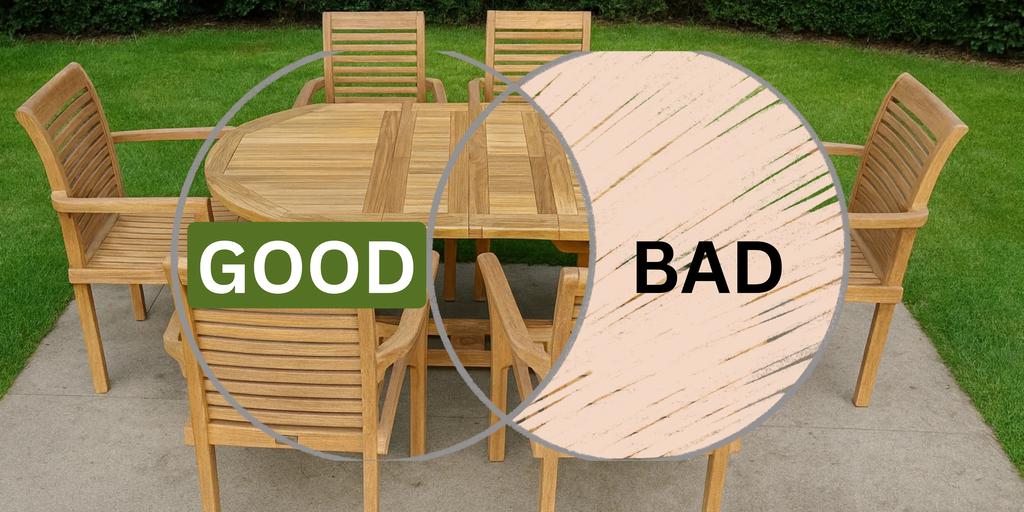
Good quality teak from the heartwood has a tight, consistent grain. The lines running through the wood are close together and relatively even. The surface has a slight natural lustre to it, even before any treatment has been applied, because the natural oils in the wood give it a faint sheen.
Teak with a higher proportion of sapwood tends to have a more open, irregular grain. It can look a little rougher or more porous. In some cases it may feel slightly softer when you press it with your fingernail, though this is not always a reliable test on its own.
Colour is worth noting too. Fresh heartwood-rich teak is a warm golden brown. It is a rich colour and relatively consistent across the surface. Wood with more sapwood often looks paler or more uneven in tone, sometimes with yellowish or washed-out patches, which tells you the oil content is lower.
One thing I always tell customers: do not confuse the colour of a finish or treatment with the natural colour of the wood. Some cheaper furniture is stained or oiled to look richer than it actually is. Run your hand across the surface and see whether the colour comes off at all. Good teak does not need to be stained.
The Weight Test
This sounds obvious, but it is one of the most reliable things you can do if you have the chance to see the furniture in person.
Solid teak from the heartwood is heavy. A well-built teak dining table is not something you move around easily on your own. When you lift a chair from a quality set, it has real heft to it. That weight comes from the density of the wood.
If a teak chair feels surprisingly light, that is worth questioning. It could mean the wood has a high proportion of sapwood, that the planks are thinner than they should be, or that sections are hollow. Some manufacturers hollow out legs or use very thin stock to reduce costs while still labelling the product as teak.
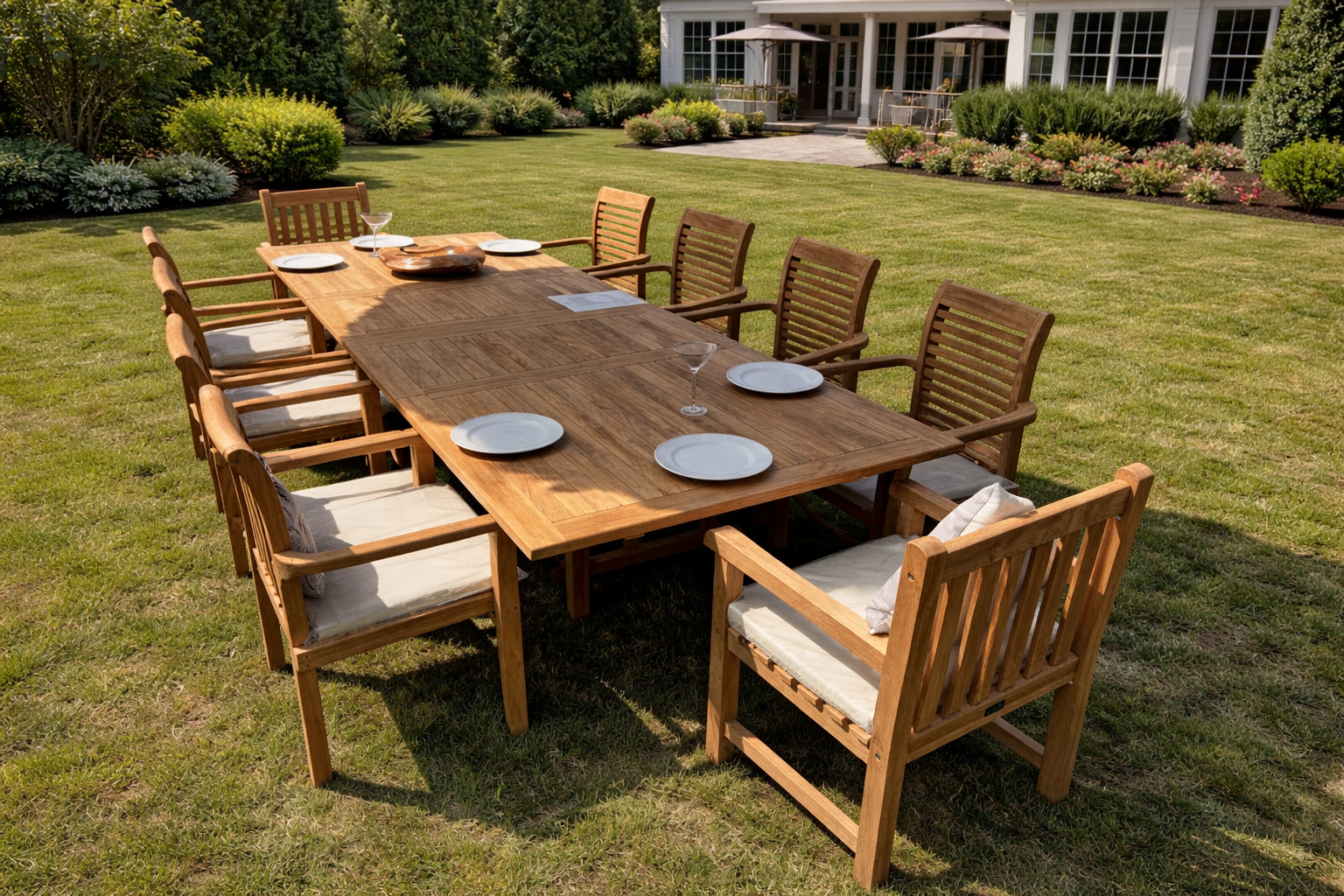
For reference, our stacking chairs for the 10-seater rectangular extending set measure 95cm by 52cm by 63cm. A set of 10 of those chairs, built properly from solid teak, has real weight to it when delivered. Customers notice that when they open the boxes.
Joints: The Detail That Separates Quality Sets From the Rest
This is the area where I see the biggest difference between furniture that lasts and furniture that does not, and it is the one that most buyers completely overlook.
The traditional joint used in quality teak furniture is the mortise and tenon joint. This is a method of joinery that has been used in woodworking for centuries. One piece of wood has a projection cut into it (the tenon), which slots into a matching hole cut into the adjoining piece (the mortise). When done properly with tight tolerances and the right adhesive, this creates a joint that is genuinely strong and long-lasting.
All the dining sets we stock are built using mortise and tenon joints. When you sit at one of our tables and pull a chair in, it does not wobble. When you lean back in a chair after dinner, it holds. That is not an accident, it is the result of proper construction.
The cheaper alternative is to use bolts, screws, or dowels to join the pieces together. These are faster and cheaper to manufacture, but they do not have the same longevity. Metal fixings can corrode over time outdoors, and when they do, the joint loosens. Dowels can work loose as the wood expands and contracts through changing temperatures and humidity.
If you are buying online and cannot inspect the furniture yourself, look for explicit mention of mortise and tenon construction. If the product description does not mention it, ask. If they cannot confirm it, be cautious.
Plank Thickness and Table Top Construction
On a dining table, the thickness and construction of the top is one of the clearest indicators of quality.
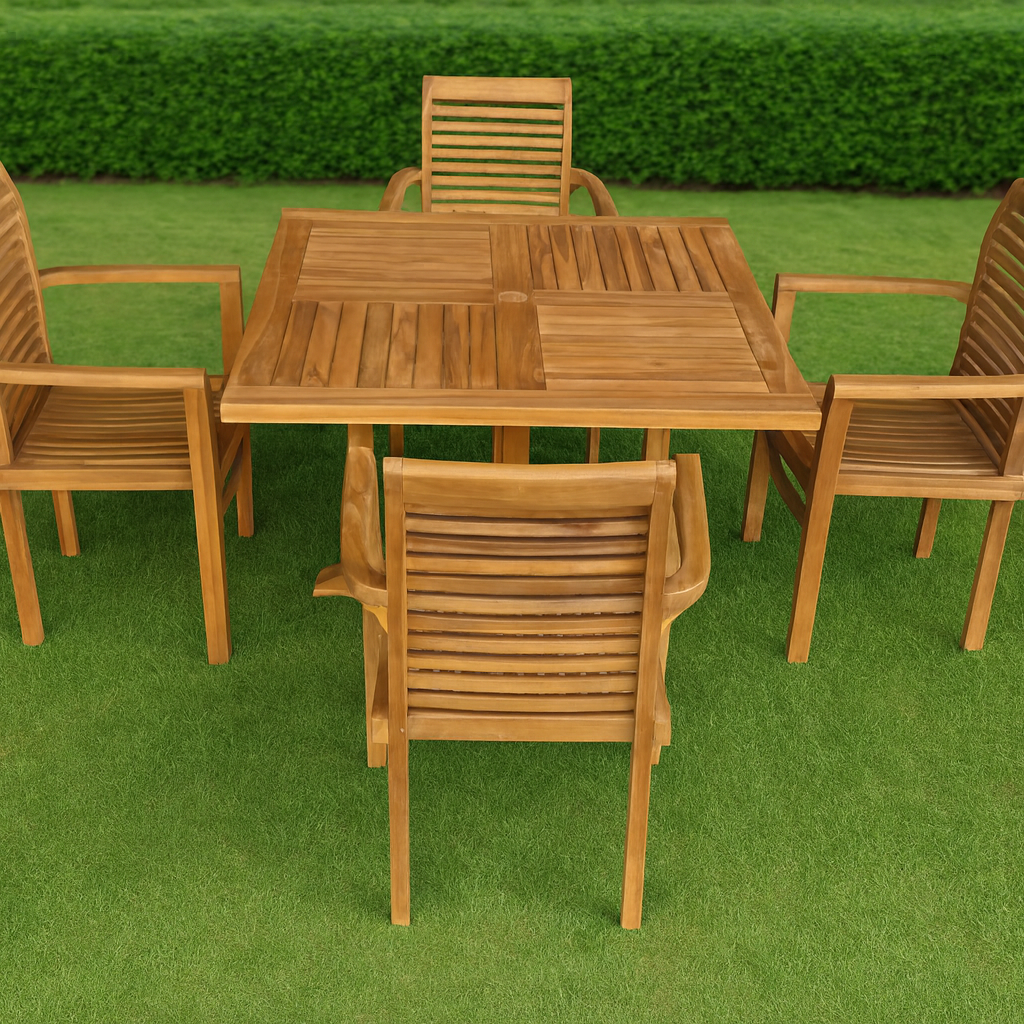
A well-made teak dining table top is built from individual planks of solid wood, arranged side by side and joined together. The planks should be of a consistent thickness, typically around 2 to 2.5cm on a quality table, though this can vary. Look at the edge of the table top to assess this. Thinner planks are a cost saving measure and will flex more over time.
Some lower-cost tables use a veneered top, where a thin layer of teak or teak-look material is applied over a cheaper substrate. These can look fine initially, but they do not weather in the same way as solid wood, and once moisture gets into the substrate, it deteriorates quickly.
On our extending sets, including the 10-seater rectangular table which extends from 200cm to 300cm, the top is solid teak throughout including the extension leaf. The extension mechanism is a double leaf design that one person can operate easily, and it locks solidly in the extended position with no flex or movement. That matters when you have people leaning on the table during a meal.
Surface Finishing and What It Tells You
How a piece of furniture is finished before it leaves the factory says a lot about the care that went into making it.
Good teak furniture is sanded to a smooth, consistent finish. Run your hand across the surface and underneath the table top, along the chair legs, and across the apron (the frame beneath the table top). On a properly finished piece, the surface feels smooth and even without rough patches, splinters, or obvious tool marks.
Cheaper furniture is often finished more quickly, and you can feel the difference. Rough patches on the underside or on less visible areas suggest the same approach was taken throughout, including in the joints and the wood selection.
The finish also affects how the wood ages. Properly sanded teak develops a consistent silver-grey patina as it weathers, which many people find genuinely attractive. You can see this effect on older teak benches in public gardens and parks all over the UK. Poorly finished teak, or wood with a lot of sapwood in it, weathers unevenly and can develop a blotchy, rough appearance that is harder to maintain.
Understanding Surface Checking: Normal or a Problem?
This is something I explain to customers regularly, because it causes unnecessary concern when people do not understand what they are looking at.
Surface checking refers to fine, shallow cracks that can appear on the surface of teak as it acclimatises to its environment. These are not structural cracks. They do not go deep into the wood and they do not affect the strength of the furniture in any way.
What causes them is the wood adjusting to the humidity conditions of its new environment. Teak is often manufactured in a tropical climate and then shipped to the UK, where conditions are quite different. As the wood settles, it can develop these fine surface lines during the first few months.
This is a natural characteristic of solid teak. It is not a fault, it is not a sign of poor quality, and it does not need to be fixed. In fact, it is one of the markers that confirms you have solid wood rather than a veneer, because veneers do not check in the same way.
Where it becomes a concern is if you see deep cracking, particularly across joints or through the thickness of a plank. That kind of cracking is different, and it can indicate either a structural problem with the joint, wood that was not properly dried before manufacture, or very poor quality material. Fine surface checking is normal. Deep splitting is not.
Sustainability and Certification: Why It Matters for Quality
The best teak on the market today comes from managed plantations, not from old-growth forest. Sustainably sourced plantation teak is grown under controlled conditions, harvested at the right age, and replanted after felling. The UK government licences timber imports, and properly sourced teak comes with documentation to confirm its origin.
At our end, all the teak we use is licensed and verified as sustainable. It is also kiln dried as part of the quality process. These two things go together because responsibly managed plantation teak is processed with the same care as it was grown with.
Why does this matter to quality? Because teak from an unknown or unverified source may have been harvested too young, processed too quickly, or stored improperly. Young teak has less heartwood and lower oil content. Improperly dried teak is more prone to movement, cracking, and structural issues once it is in your garden.
If a seller cannot tell you where their teak comes from or whether it is certified, that is a red flag.
Buying Online: What to Look For in a Product Listing
A lot of teak furniture is bought online now, which means you are relying entirely on the information provided and the reputation of the supplier.
There are a few things a product listing for a quality teak set should include. First, it should confirm the wood comes from the heartwood of the tree, not just describe it as “solid teak” or “premium teak” without any further detail. Second, it should confirm kiln-dried construction. Third, it should state that mortise and tenon joints are used. Fourth, it should give you real dimensions including table thickness, not just the footprint. And fifth, the supplier should have a clear returns policy and real contact details.
A vague product description with no supporting specifics is a reason to ask more questions before buying.
A Note on Price
I am not going to pretend that price tells you everything, because it does not. There is overpriced average furniture and genuinely good furniture at fair prices. But if a 10-seater teak dining set is being sold for a few hundred pounds, something has to give somewhere. Properly sourced heartwood teak is a premium material. Mortise and tenon construction takes skilled labour and time. Kiln drying adds cost. A properly built, properly sourced large teak dining set is not cheap.
What you are paying for when you invest in quality teak is decades of use with minimal maintenance. The furniture we stock is built to last outdoors in all weathers, year round, for many years. A cheap alternative might look similar on day one, but it will not tell the same story five years later.
In Summary
Knowing good teak from bad teak is mostly a matter of knowing the right questions to ask and the right things to look at.
Look at the grain closely and check that it is tight and consistent. Lift the furniture if you can and feel the weight. Ask specifically about heartwood sourcing and kiln drying. Look for mortise and tenon joints and ask directly if the listing does not confirm it. Check the thickness of the planks on the table top. And buy from a supplier who can answer your questions with confidence and has the certification to back up their claims.
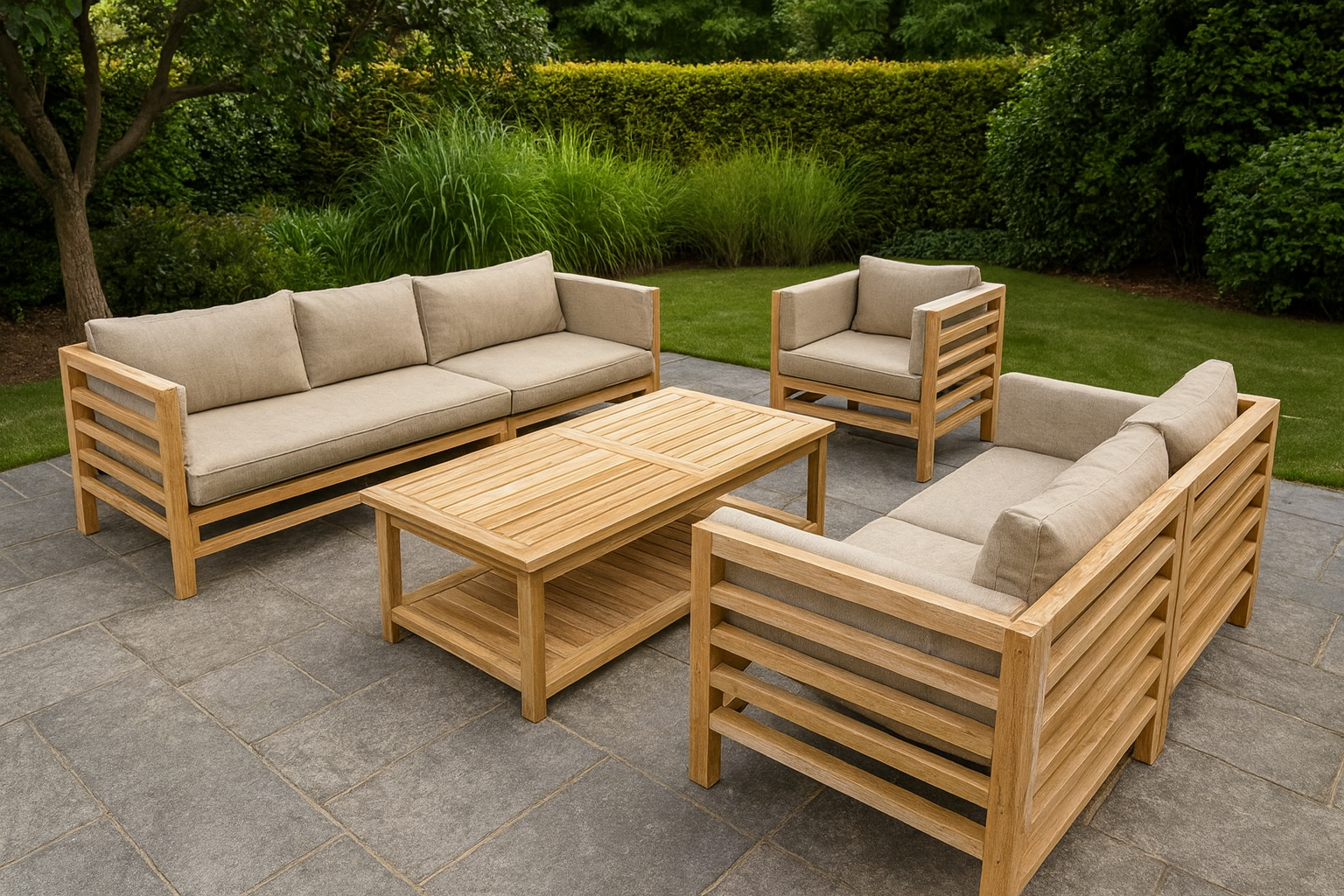
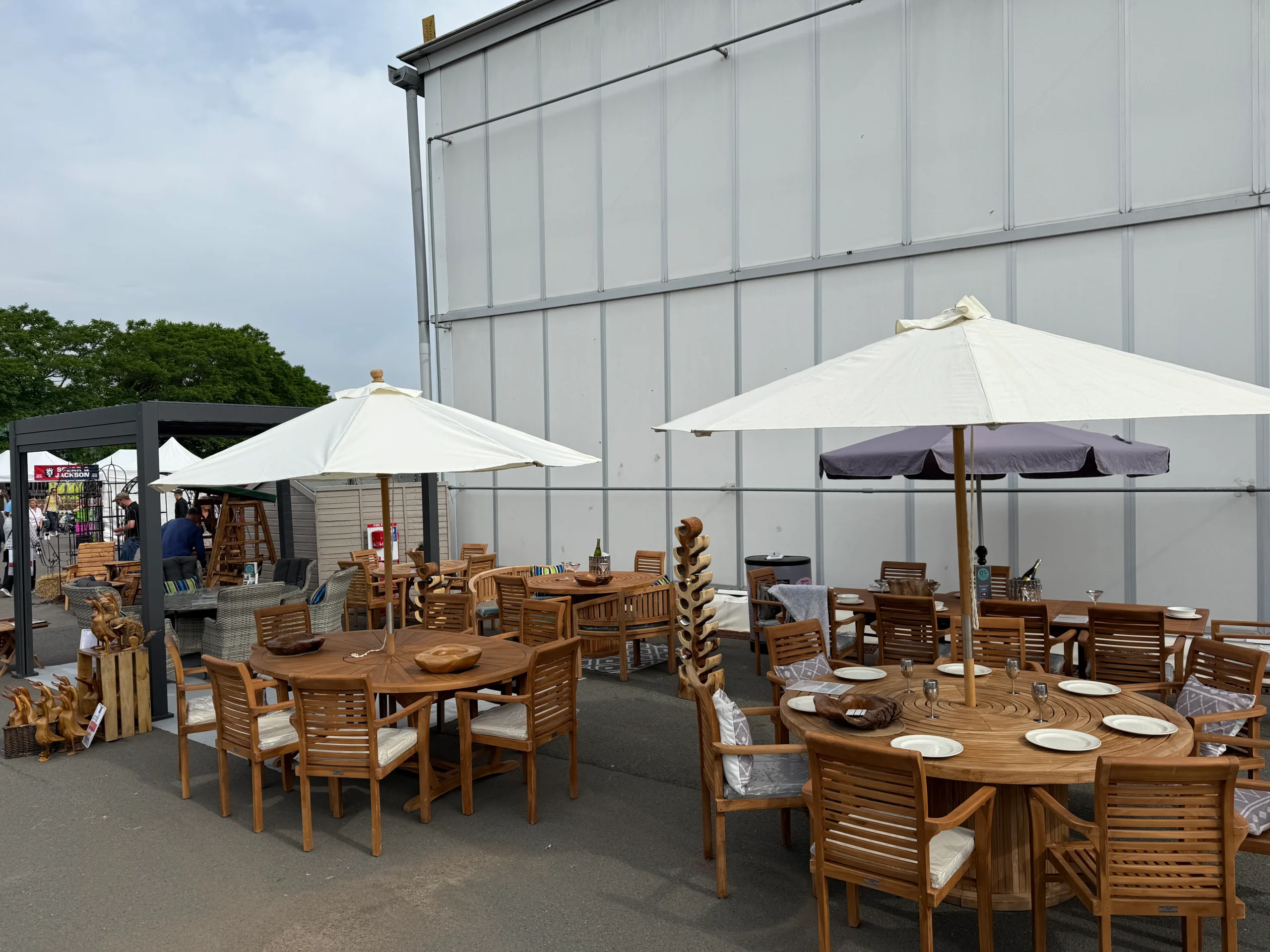
If you have any questions about the specific sets we stock, including our extending dining sets, round tables, benches, or sofa sets, feel free to get in touch. I would rather help you get this right than have you buy the wrong thing and come back disappointed.