🎉 Exciting News! Start with just a 10% deposit and choose a delivery date in 2026 to pay the rest. Flexibility made easy!

Why Mortise and Tenon Joints Are Important for Teak Furniture

Beyond the Surface: What Really Makes Furniture Last
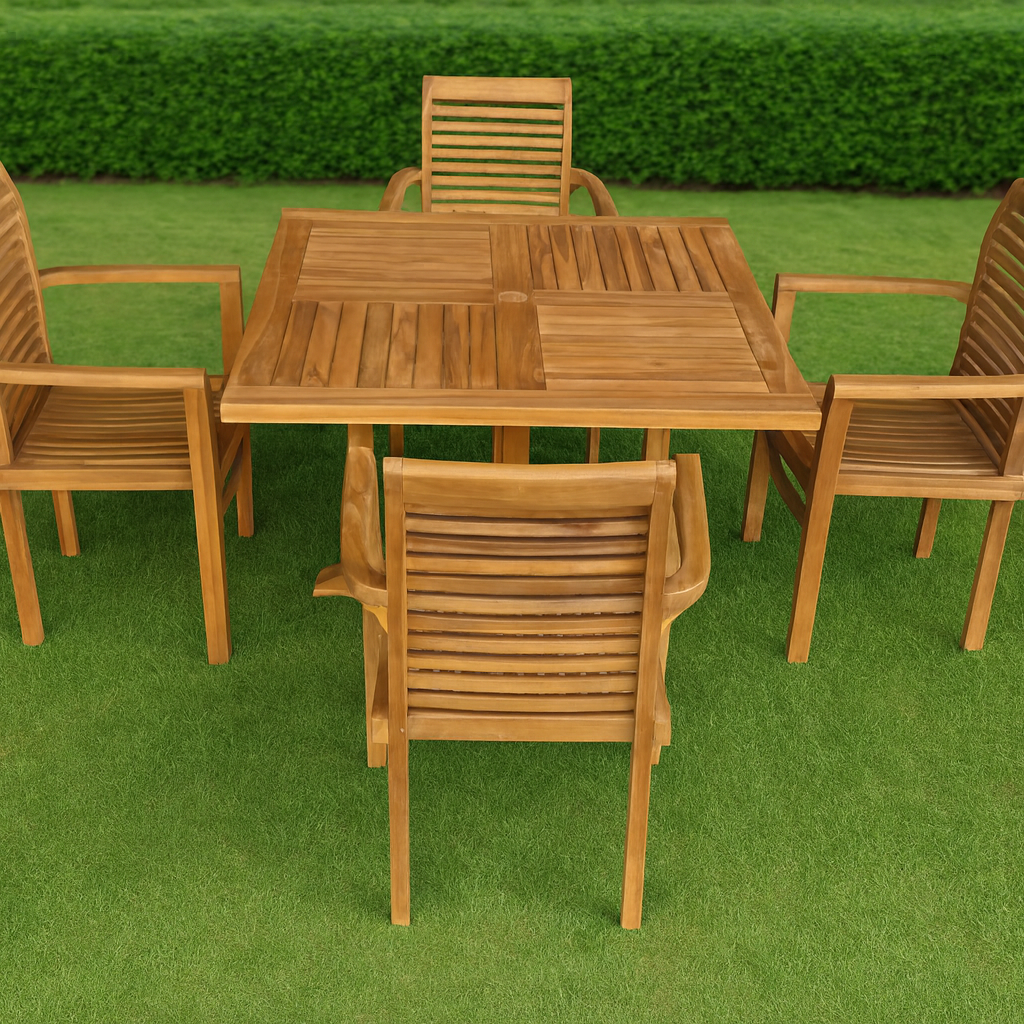
When you begin the search for premium garden furniture, your eyes are naturally drawn to the surface. You look at the golden-honey hue of the timber, you run your hand over the smooth sanding of the armrests, and you visualize how a sprawling dining set will look on your patio during a summer barbecue.
These aesthetic elements are undeniably important. However, in our decades of experience designing and manufacturing outdoor furniture, we have found that the surface beauty is only half the story. The true determinant of the longevity of a heavy-duty garden bench or extending table is not what you can see—it is what lies hidden inside the timber.
It is the joinery.
Specifically, the Mortise and Tenon joint. This ancient method of connecting wood is the gold standard of carpentry, representing the pinnacle of structural integrity for substantial outdoor pieces.
In this extensive guide, we are going to strip away the varnish and look at the raw engineering of outdoor furniture. We will explain how wood behaves in the volatile British climate and why we prioritize this time-honored construction method for our flagship pieces, such as our 10-Seater Rectangular Extending Tables and Lutyens Benches.
The Engineering of the Joint: Back to Basics
To understand why this joint is superior for heavy structural pieces, we must first understand what it actually is. In a world accustomed to flat-pack convenience, true carpentry is a celebrated art form.
The Anatomy of a Mortise and Tenon
At its most fundamental level, a Mortise and Tenon joint is a connection between two pieces of wood at an angle of 90 degrees. It consists of two distinct components that are machined to fit together with airtight precision:
-
The Mortise (The Female): This is a cavity, usually square or rectangular, cut deep into the side of a timber component (such as a table leg).
-
The Tenon (The Male): This is a projecting tongue cut into the end of the mating component (such as a table apron or rail).
The tenon is inserted into the mortise. Once fitted, the surface area contact between the two pieces of wood is substantial. This massive surface area is critical because it provides a huge canvas for the wood glue to bond, creating a fused unit that is effectively stronger than the wood itself.
The “Draw-Bored” Technique
In high-end teak furniture, we often go a step further. We employ a technique known as “draw-boring” or pegging. This involves drilling a hole through the side of the mortise and passing it through the tenon. A teak dowel is then hammered through this hole to lock the joint in place.
But here is the engineering secret: the hole in the tenon is drilled slightly offset from the hole in the mortise. When the tapered dowel is driven in, it forces the holes to align, pulling the tenon incredibly tight against the “shoulders” of the joint. This creates a mechanical lock under tension, ensuring the joint remains tight for decades.
The Physics of Wood: Managing the Environment
You might ask, “Why go to all this trouble? Why is this joinery style so critical for large outdoor pieces?”
To answer that, you have to understand the material science of wood. Wood is not a static material like plastic or stone. It is hygroscopic. This means it is constantly interacting with the moisture in the air, trying to reach an equilibrium with its environment.
The Expansion-Contraction Cycle
In a typical year, your garden furniture goes through a physical workout:
-
Winter: The air is damp, and it rains frequently. The cells of the wood absorb moisture and swell. The timber physically gets bigger.
-
Summer: The sun beats down, and the air is dry. The moisture evaporates, and the wood shrinks.
This cycle happens every year, without fail.
The Mortise and Tenon Solution
For large, heavy items like extending tables and park benches, accommodating this movement is vital. A Mortise and Tenon joint is a wood-on-wood connection.
When your Teak Outdoor Extending Dining Table swells in the November rain, the tenon swells and the mortise swells. They move together. When they shrink in July, they shrink together. The joint “breathes” as a single, cohesive unit. This harmonious movement reduces internal stress on the timber frame, ensuring that the piece maintains its shape and structural rigidity regardless of the season.
Application in Design: Why Structure Dictates Form
The necessity of this joinery becomes even more apparent when we look at specific designs in our catalogue. Different pieces of furniture experience different physical stresses, and the joinery must be adapted to handle them.
1. The Challenge of Lateral Stress: Teak Sofa Sets
Unlike a dining chair where the weight is mostly vertical (downward), a sofa set is subjected to “dynamic lateral loads.”
Think about how you use a Corner Teak Sofa Set. You don’t just sit; you relax back. You lean heavily against the backrest while reading. You stretch out and push against the armrests. All of these actions create side-to-side forces.
A Mortise and Tenon joint features a long “tongue” buried deep inside the leg. This deep insertion resists twisting forces exceptionally well. It ensures that the frame of your sofa remains rigid and secure, providing that solid, grounded feeling even after years of lounging.
2. The Heavy-Duty Mechanism: Extending Tables
Our 10-Seater Rectangular Extending Tables are marvels of utility, but they represent a massive structural challenge.
An extending table has a split top and a heavy mechanism hidden underneath. When you pull the table open to insert the leaves, the center of gravity shifts. The legs, which are often positioned at the corners, have to support a span of timber that is now much longer.
By using deep, pinned Mortise and Tenon joints to connect the apron to the legs, we create a rigid “box frame.” This stiffness prevents the legs from bowing under the weight and ensures that the sliding mechanism operates smoothly for decades because the tracks remain perfectly parallel.
3. The Complex Curves: The Lutyens Bench
The Lutyens Teak Garden Bench is one of the most iconic designs in British gardening history. With its flowing, rolled arms and intricate arched back, it is a piece of art.
However, from a woodworking perspective, it is a complex assembly. The curves mean that the grain of the wood changes direction frequently. The Lutyens design relies entirely on the precision of Mortise and Tenon joinery. The complex backrest, with its multiple vertical slats, requires dozens of individual mortises to be cut into the rails. This distributes the pressure of your back across the entire structure, creating a seamless bond between the curved elements.
The “Glue Problem” and Why Teak is Special
There is another layer of complexity that validates the need for this specific joint: the nature of Teak (Tectona Grandis) itself.
We champion Teak because it is arguably the best timber in the world for outdoor use. It is naturally saturated with oils and rubber. These oils are what make it rot-resistant and waterproof. However, these same oils make it very difficult to glue.
Standard wood glues struggle to penetrate the oily pores of teak. This is why the mechanical lock of the Mortise and Tenon is non-negotiable for our heavy-duty items. While we use specialized high-tech epoxies, we do not rely on them solely. The tenon provides the physical hold; the glue is just the secondary stabilizer.
The Financial Argument: An Investment in Permanence
We often hear from customers who are comparing our prices to budget retailers. It is a fair comparison to make, but it is essential to look at the math of longevity.
Furniture constructed with Mortise and Tenon joints is more expensive to produce. It requires:
-
More timber (extra length is needed on the board to cut the tenon).
-
Precision machinery (CNC routers) or skilled hand-craftsmanship.
-
More time for assembly (clamping, drilling, pegging, and drying).
However, this investment pays off in lifespan. A Mortise and Tenon bench is an “Heirloom Approach.” It is built not just for a few seasons, but to weather the decades, eventually turning that beautiful silver-grey while remaining structurally sound. When you factor in the longevity, the “expensive” joinery is often the most economical option over the life of your garden.
Identifying Quality: The “Wiggle Test”
Since you cannot X-ray furniture in a showroom or through a website, how can you be sure you are getting genuine Mortise and Tenon construction? Here are a few things to look for when inspecting our premium products:
-
Look for the End Grain: If you look at the side of a leg on our heavy benches, you might see the small circular end of the wooden dowel (peg). This is a badge of honor. It shows the joint is pinned through.
-
Clean Lines: On a high-quality Round 4-Seater Teak Table, the frame should appear seamless. The hardware should be reserved for moving parts (like hinges or sliders), leaving the main structural frame uninterrupted.
-
The Lift Test: This is the ultimate test for rigidity. Stand at one end of a table and lift a corner. The opposite back leg should lift off the ground almost instantly. Our furniture moves as a solid block because the joinery eliminates flex.
Maintenance Made Simple
There is a common misconception that high-quality wood requires high-maintenance care. Ironically, premium construction often requires less fuss.
With Mortise and Tenon joinery, the connections are permanent. There is nothing to tighten. Your maintenance schedule for a piece like our Celestia Teak Garden Furniture Set is purely cosmetic:
-
Cleaning: Scrub with soapy water or a teak cleaner to remove surface dirt and pollution.
-
Protection: If you want to maintain the golden colour, apply a protector. If you prefer the grey, do nothing.
You will never have to worry about the structural integrity of the frame; the engineering takes care of itself.
Conclusion: A Philosophy of Permanence
In a culture that often prioritizes the quick and the disposable, sticking to a 4,000-year-old woodworking tradition is a deliberate choice.
The Mortise and Tenon joint is not just a way to stick two pieces of wood together; it is a philosophy of permanence. It acknowledges that we are building furniture to live outdoors, in the rain, the snow, and the sun. It respects the nature of the teak tree, working with its natural movement to create pieces that endure.
When you browse our collection—from the heavy-duty 10-Seater Rectangular Extending Tables to the intricate Lutyens Benches—you are looking at products built with this philosophy.
Discover the difference of true craftsmanship. If you are ready to invest in garden furniture that respects the wood and the test of time, we invite you to explore our full range.