🎉 Exciting News! Start with just a 10% deposit and choose a delivery date in 2026 to pay the rest. Flexibility made easy!

Outdoor Dining for 8 or More: Which Tables and Sets Handle Large Gatherings?

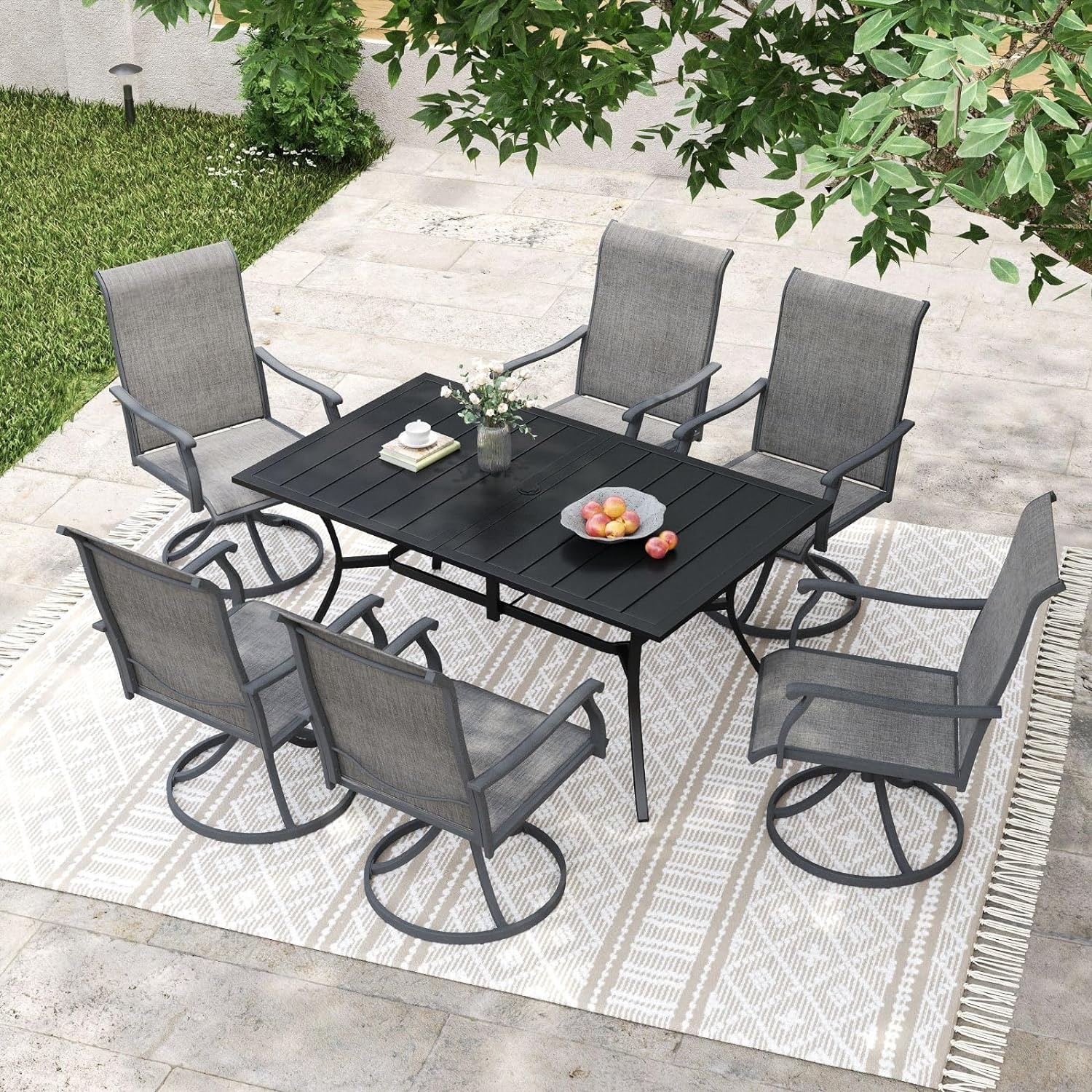
Outdoor furniture trends 2026 emphasise functional outdoor living and warm, inviting environments, with patios becoming the main entertaining space during summer months. Generously sized dining sets are increasingly popular as homeowners treat these areas as extensions of their kitchen or dining room. In fact, outdoor furniture now mirrors interior comfort standards rather than feeling traditionally ‘outdoor’.
Choosing the right setup for large gatherings requires careful planning. This guide explores outdoor dining tables that seat eight or more, covering materials such as teak garden furniture and rattan garden furniture, table shapes, complete sets versus custom collections, and essential space considerations for your patio furniture.
Planning Your Space for Large Outdoor Gatherings
Measuring your patio or garden area
Start with a tape measure to record the length and width of your space. Measure at multiple points to capture irregularities in shape, including curved edges or unusual angles. Note any permanent features such as railings, pillars, or built-in structures that influence where your outdoor dining tables can sit. Sketching your layout on grid paper helps visualise how these elements interact with potential furniture arrangements.
Check vertical space as well. Measure from ground to overhead structures like pergolas or tree branches to avoid obstructions, particularly if you’re considering taller dining sets.
Understanding circulation space around the table
Leave at least 1.2 metres of clearance around the table for chairs and easy movement. This measurement accounts for both the furniture footprint and working space needed around each piece. Between the table’s edge and any walls, fences, or surrounding furniture, maintain a minimum gap of 60cm.
Accounting for chairs and movement
You need 90cm of space behind each chair as a bare minimum. This clearance allows guests to pull out chairs and stand without squeezing past others. For walkways between activity areas, aim for 90cm to prevent bottlenecks and maintain safety. Pathways should remain clear when all chairs are occupied, particularly when carrying food or drinks.
Shelter and weather considerations
Sunlight placement matters, but shade proves equally vital. Where natural shade is limited, parasols offer protection from sun and unexpected wind. Weatherproof materials like powder-coated aluminium, teak garden furniture, or synthetic rattan withstand elements and extend the lifespan of your patio furniture.
Start With Your Space – And Be Honest About It
Before you even think about style or material, measure your garden properly. A lot of customers sketch a rough estimate in their head and then order a table that barely fits.
For a table that seats 8 comfortably, you’re typically looking at a rectangular top of around 200–220cm in length. Add at least 90–100cm on each long side for chairs and movement — that’s people pulling chairs in and out, walking behind seated guests, carrying food. You’re realistically looking at a footprint of around 4 metres by 3.5 metres just for the dining zone alone.
If your patio is smaller than that, don’t force it. Either go with a round or oval format (which uses space more efficiently and seats people more sociably), or look at an extending table that closes down for everyday use and opens up for gatherings.
One thing I’d strongly recommend: before ordering anything, lay out the dimensions using string or garden canes. It sounds simple, but it genuinely changes how customers think about what fits.
Material Options for Outdoor Dining Tables That Seat 8 or More
Teak garden furniture for durability
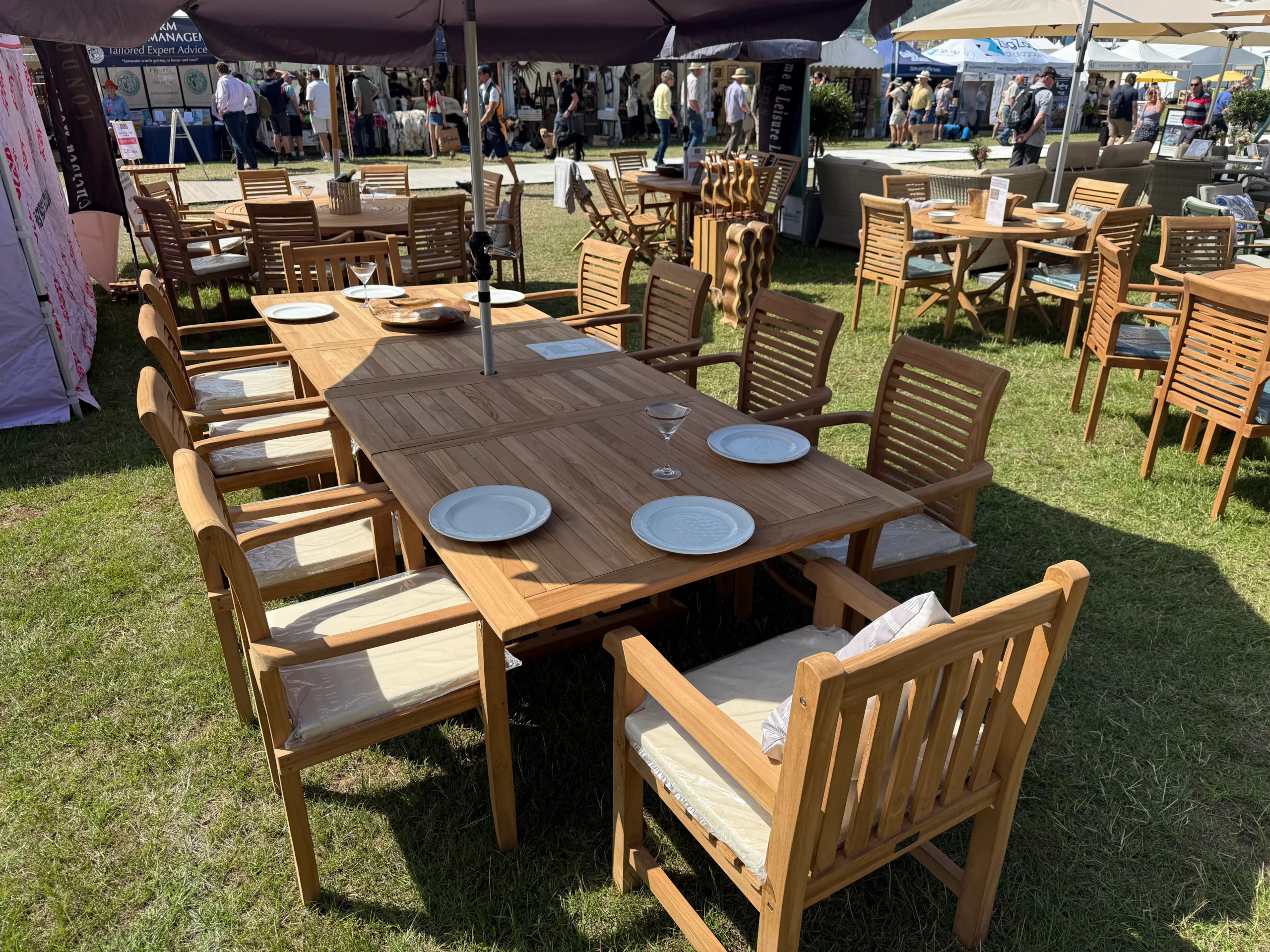
Grade-A teak contains natural oils and rubber that create a waterproof barrier, preventing warping, rot, or brittleness in freezing temperatures. Teak outdoor dining tables seat up to eight people and remain outdoors year-round with minimal upkeep. The wood’s tight grain structure and high oil content resist UV rays, humidity, and heavy rainfall.
Your furniture develops a silvery-grey patina if left untreated, whereas applying teak protector maintains the golden-brown colour. This colour change is cosmetic and doesn’t affect structural integrity. Sustainably sourced plantation teak offers pest resistance without chemical treatments. Pre-drilled parasol holes with flush-fitting plugs add convenience, while radial edge slats encourage water runoff after rain.
Cast aluminium outdoor dining tables
Cast aluminium resists rust and corrosion whilst remaining lightweight for easy rearrangement. Eight-seater sets feature stackable chairs and adjustable table feet for uneven surfaces. The coated material withstands all seasons without degradation. A damp cloth provides sufficient cleaning, eliminating sanding or repainting requirements.
Rattan garden furniture for natural appeal
Synthetic rattan garden furniture mimics natural weave whilst offering superior weather resistance. Eight-seater sets include ice bucket versions for beverage cooling on hot days. Natural rattan provides raw appeal but requires covering when not in use. Polyrattan alternatives resist UV radiation and moisture without insect vulnerability.
Metal and powder-coated finishes
Powder-coated steel features breathable mesh panels with Elotherm protective finish for rust, UV, and moisture resistance. The coating thickness ranges from 2 to 8 mils, forming a molecular bond stronger than traditional paint. High-grade steel with zinc coating and hand-etched antique patina comes with 25-year structural guarantees. Correspondingly, powder coating contains zero volatile organic compounds whilst maintaining recyclability.
Table Shapes and Configurations for Large Groups
Rectangular tables for maximum seating
An 8-foot rectangular table accommodates eight people comfortably. This shape proves most efficient for groups of 10 or more, making optimal use of available space whilst fitting well on long, narrow patios. Rectangular outdoor dining tables position hosts at the head whilst guests line the sides, creating a formal arrangement for serving and dining.
Oval tables for conversation flow
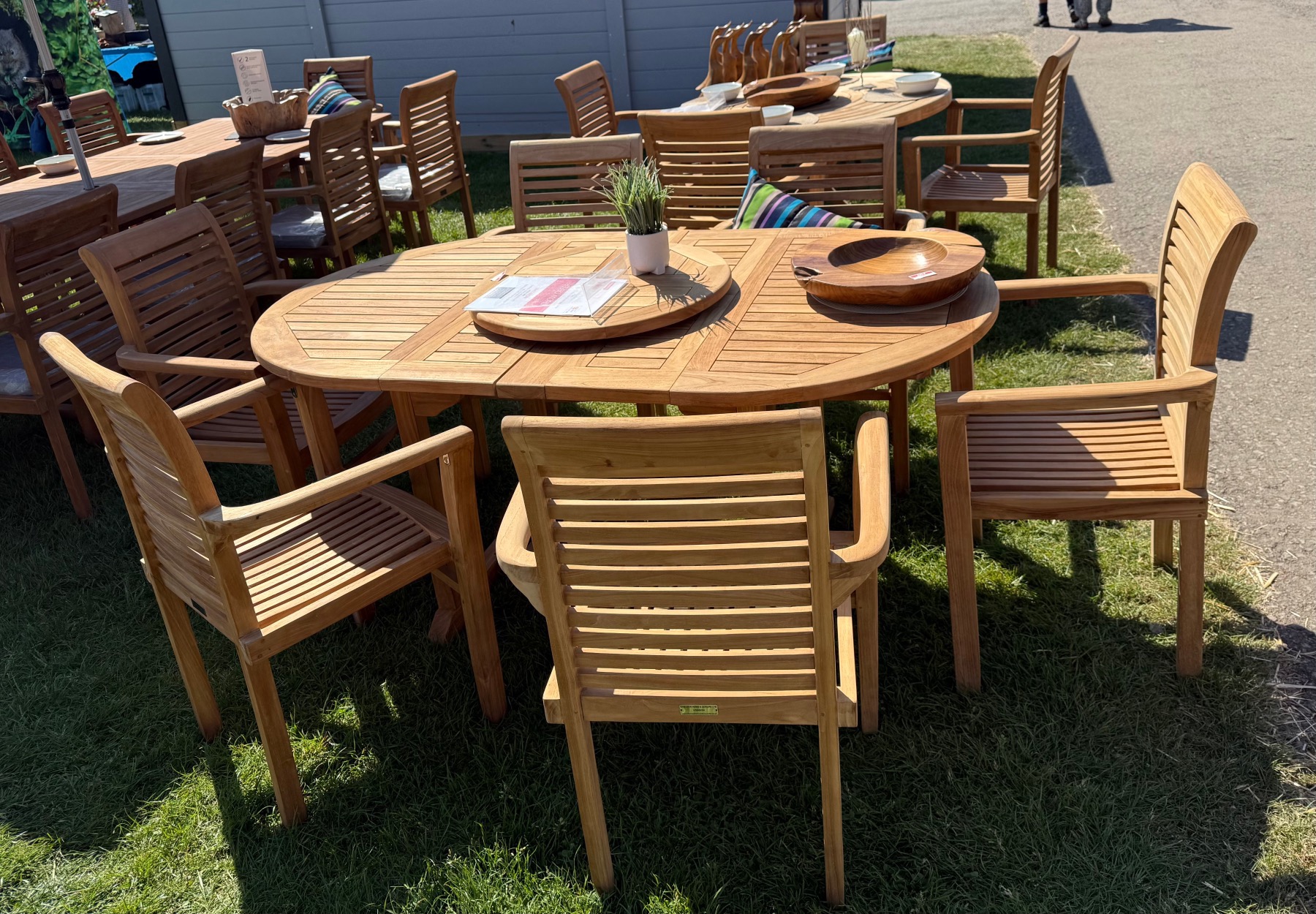
Oval configurations merge rectangular efficiency with rounded sociability. The absence of sharp corners facilitates smooth movement around the table. A 2000mm oval setting seats 8-10 guests, or up to 12 when benches replace chairs. Oval rattan garden furniture fits narrower areas whilst maintaining the relaxed feel that encourages natural conversation flow.
Extendable tables for flexibility
Extendable designs adapt to varying guest numbers without requiring multiple table purchases. Extensions typically add four seats, expanding capacity from 8 to 12 people. Tables extending from 240cm to 320cm seat 10-12 guests when fully opened, then retract to free valuable patio space for everyday use.
Round tables for intimate gatherings
Round tables position everyone at equal distance, eliminating hierarchical seating. They function best for groups of six to eight or fewer, where the circular arrangement promotes inclusive conversation. Round teak tables fit compact spaces whilst maintaining superior stability through centralised weight distribution.
What to Ask Before You Buy
After a decade of this, the questions that matter most are rarely about style:
Where will the table actually live? Fully exposed to the elements year-round is very different from under a covered pergola. If it’s fully exposed, teak or powder-coated aluminium are your best options. Rattan can work year-round but benefits from covers in winter.
Who will be using it most? A family with young children needs something robust that can take a knock. Entertaining guests mostly in summer is a different priority to daily family dining outside.
What’s your real budget? A quality 8-seater teak set is an investment. But spread over 15–20 years of use, it works out cheaper than replacing a budget set every three or four years. That’s the honest conversation I have with customers who come in thinking they want to spend as little as possible.
Complete Dining Sets vs Building Your Own Collection
Benefits of matched dining sets
Matched sets eliminate guesswork whilst ensuring seamless flow of colour, material, and design. For homeowners without design experience, coordinated furniture creates cohesive outdoor spaces without worrying how pieces look together. Complete dining sets prioritise uniformity, translating to consistent seat heights, depths, and back support across all pieces. Bundled pricing often represents better value compared to purchasing individual items separately.
Mixing materials and styles
Alternatively, mixing pieces adds character and allows spaces to evolve with changing needs. Unify through colour by matching fabric accents, cushions, or parasols in the same hue. Balance works equally well—positioning bolder chairs at rectangular table ends increases seating whilst creating drama. Cast aluminium tables pair beautifully with wooden chairs, whilst rattan furniture complements metal frames for textural depth.
Choosing the right chairs for comfort
Seat height and armrest clearance prevent awkward leaning at tables. Ergonomic back support with curved lines following the spine makes extended outdoor meals comfortable. Cast aluminium chairs offer lightweight, weatherproof construction with minimal maintenance. Optional cushions in various colours enhance comfort for longer gatherings. Stackable designs simplify storage during winter months.
Benches for additional flexible seating
Garden bench dining sets provide social, relaxed atmospheres for family meals. Benches accommodate more people than individual chairs—children squeeze together easily during gatherings. Moreover, benches tuck completely under tables when not in use, freeing patio space. Mixing benches with chairs creates seating variety whilst maintaining functionality.
A Note on Chairs and Seating Comfort
The table usually gets all the attention, but the chairs matter just as much — possibly more, because guests sit in them for hours.
Look for chairs with a seat depth of at least 45cm and some back support. Stackable designs are worth considering for an 8-seater setup because they make off-season storage manageable. If you’re adding cushions — which significantly improves comfort for longer meals — make sure they’re removable and have weather-resistant fabric, otherwise they’re a maintenance headache.
Benches are another option worth considering alongside chairs. A bench on one side of a large table seats more people in the same linear space, works well for families with children, and tucks under the table when not in use. I’d pair two chairs at the ends and a bench down one or both sides for a more relaxed, sociable setup.
The Bottom Line
If you’re buying an outdoor dining set that seats eight or more, buy it once. Measure your space properly, understand the materials, and put your budget into the table and chairs rather than accessories.
A solid teak dining set at this size, bought from someone who knows their stock, is something you’ll still be proud of in 15 years. A cheap set at this scale isn’t a saving — it’s a delay.
If you have questions about sizing, specific sets, or what works for your space, feel free to get in touch. This is exactly the kind of decision I’d rather help you get right than have you regret.