🎉 Exciting News! Start with just a 10% deposit and choose a delivery date in 2026 to pay the rest. Flexibility made easy!

Cantilever Parasol vs Traditional Centre-Pole Parasol: Which One Actually Suits Your Garden?

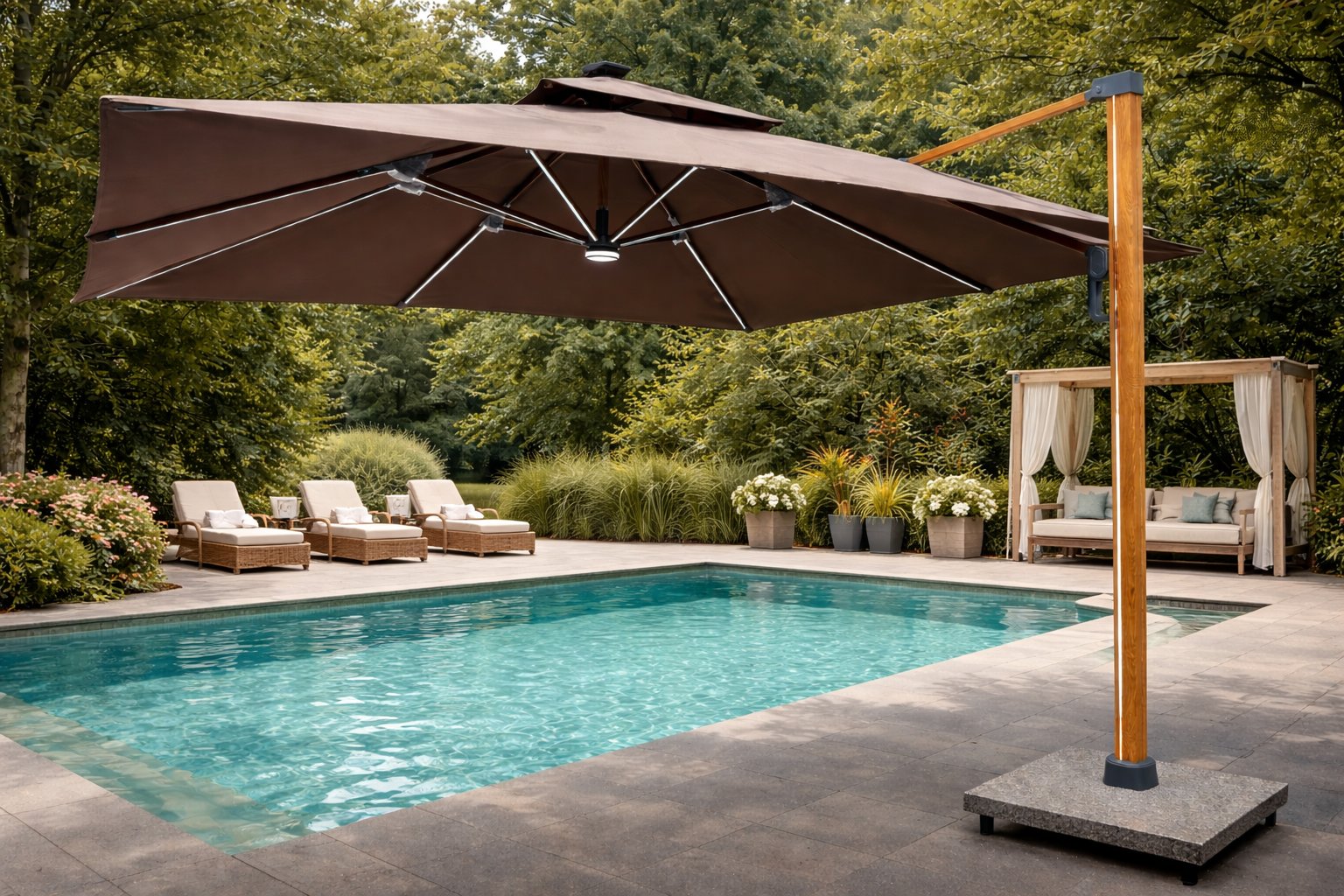
Most people who walk into a garden centre or scroll through a parasol listing online end up making this decision based on which one looks better in the photograph. Which is fair enough, because that is how most furniture gets bought. But after years of selling both types, and delivering both to customers across the UK, I can tell you that the better-looking option in the showroom is not always the one that suits the garden.
A cantilever parasol and a traditional centre-pole parasol are genuinely different products. They solve different problems. They cost different money. They work in different spaces. And the number of customers who come back and tell me they bought the wrong one is not small.
This guide is meant to stop that happening to you. Let me walk you through what each one actually is, where each one works, and how to pick the right one for your specific garden.
The Quick Answer for People Who Are in a Hurry
If you are tight on time, here is the short version. A traditional centre-pole parasol works best with a dining table that has a hole in the middle, in smaller gardens, on a tighter budget, where you want something simple and proven. A cantilever parasol works best when you have a larger patio, a sofa set or corner set with no parasol hole, when you need to cover an area rather than just a table, or when you want the flexibility to move shade around during the day.
If neither of those descriptions fits your garden exactly, which is often the case, read on. The difference between these two products is in the details, and the details are what decide which one you will still be happy with in five years.
What a Traditional Centre-Pole Parasol Actually Is
A centre-pole parasol is the version that most people picture when they hear the word parasol. It has a single vertical pole that runs through the middle of the canopy, usually fitted through a hole in the centre of a dining table, and supported by a base beneath the table. Open the parasol using a crank or pulley, and the canopy extends outward from the pole to shade the table and the people sitting around it.
This design has been used for decades because it is simple, effective, and genuinely well suited to a specific situation: dining. When your main goal is to shade a dining table and the people sitting at it, a centre-pole parasol does that better than anything else, at lower cost, with fewer moving parts to go wrong.
Where Centre-Pole Parasols Work Best
They suit dining tables that are designed with a parasol hole, which is most of our teak outdoor dining sets. The table holds the pole steady. The base beneath the table weighs it down. The whole arrangement is stable, self-contained, and neat.
They suit smaller gardens where the pole running down through the table is not blocking any useful space. They suit anyone on a tighter budget, because good quality centre-pole parasols typically cost meaningfully less than cantilever versions with the same canopy size. And they suit anyone who wants a traditional aesthetic, because this is what garden parasols have looked like for generations and the look carries a certain classic feel that some gardens call for.
Where They Start to Be the Wrong Choice
A centre-pole parasol becomes limiting in a few specific situations. If you do not have a dining table, or if your table does not have a parasol hole, you effectively cannot use one. If you are trying to shade a sofa set, a lounger, a hot tub, or a general patio area rather than a table, a centre-pole parasol cannot really reach over those spaces because the pole has to be in the middle of the shaded area.
And if you want to reposition your shade through the day, following the sun as it moves, a centre-pole parasol cannot do that. The canopy is fixed to the pole, and the pole is fixed in the table. You get shade where the table is, for as long as the sun cooperates.
What a Cantilever Parasol Actually Is
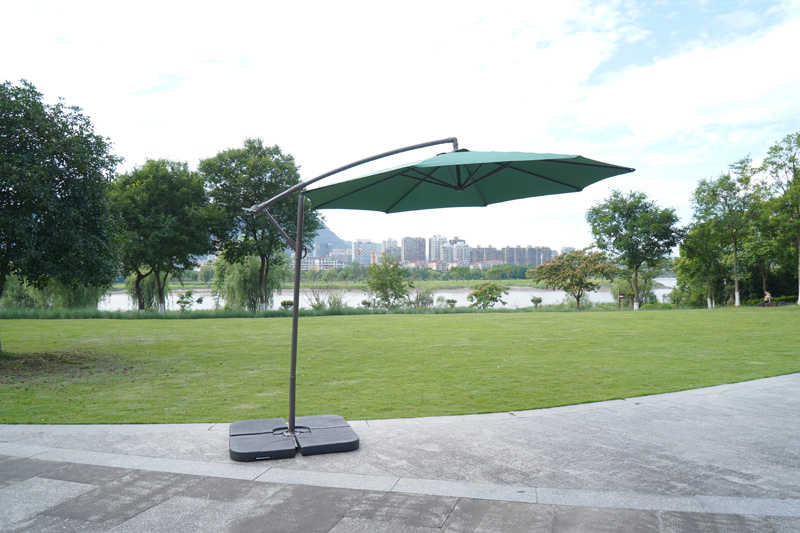
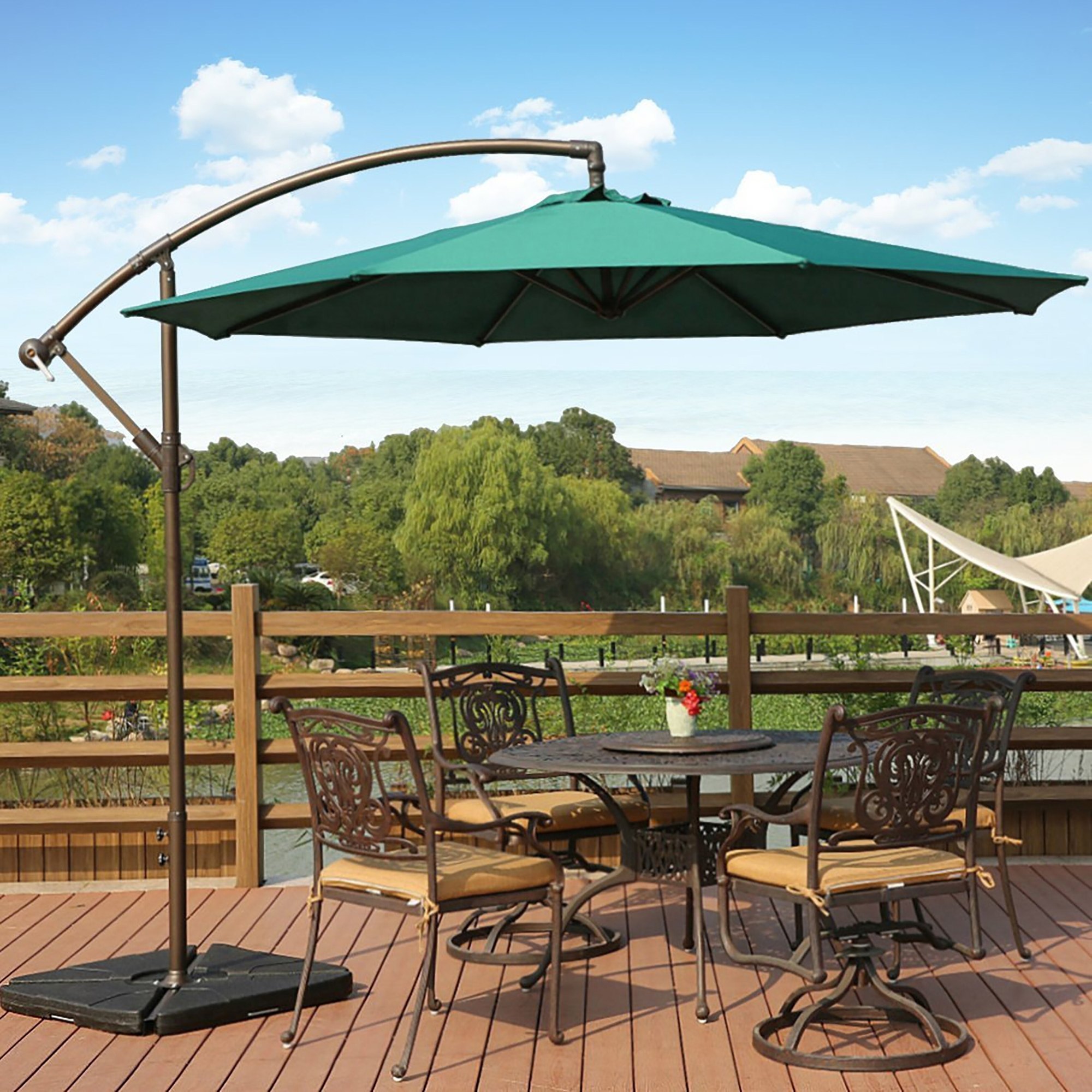
A cantilever parasol is built on a completely different principle. Instead of a pole running through the middle of the canopy, the pole sits off to one side, with the canopy suspended from an arm that extends outward. The weight of the canopy is balanced by a heavy base at the foot of the side pole.
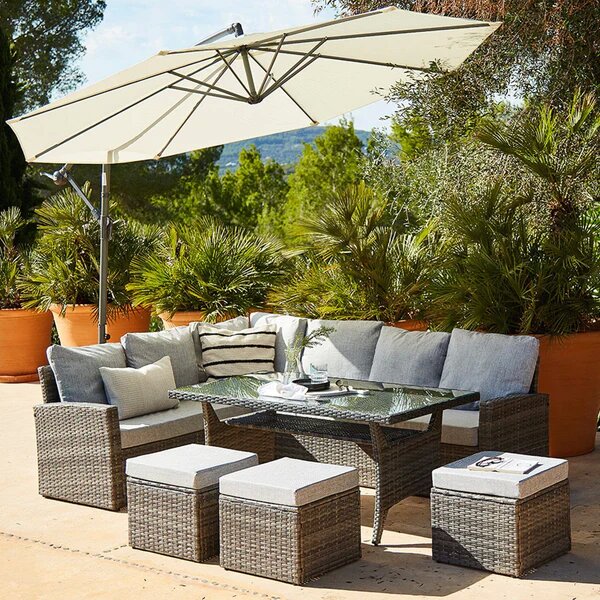
The result is a large area of shade with no pole underneath it. You can put the shade anywhere you want: over a sofa, over a dining table with no hole, over a sun lounger, over a portion of patio where you like to sit with a coffee. On better models, the canopy can rotate a full 360 degrees around the pole, tilt to different angles, and be cranked up and down as needed.
This is a genuinely clever piece of garden engineering. It solves problems that a centre-pole parasol simply cannot solve. But it also comes with its own set of realities that you need to understand before buying.
Where Cantilever Parasols Work Best
They suit patios and decked areas where the shaded zone needs to be flexible. They suit sofa sets, lounge corners, and any furniture arrangement without a parasol hole. They suit larger gardens where you want to shade a substantial area rather than just one table. And they suit anyone who wants to follow the sun through the day, because the rotation and tilt functions on a good cantilever parasol let you adjust the shade position as the light moves.
They also suit people who want a more modern, architectural look in their garden. A large cantilever parasol is a real visual statement in a way that a centre-pole parasol is not.
Where They Start to Be the Wrong Choice
Cantilever parasols are not ideal in small, tight spaces. The arm needs room to swing out, and if your garden is narrow or the patio area is constrained, you can find yourself unable to open the parasol fully without hitting a wall, a hedge, or a piece of furniture.
They also demand a heavier base than people expect. This is the point where most cantilever parasol problems come from, and it is worth spending a moment on.
The Base Question: Where Most Cantilever Mistakes Happen
A centre-pole parasol has the weight of the table holding the pole down. The geometry works naturally. A cantilever parasol does not have that advantage. The canopy is cantilevered out to one side of the pole, which means the whole structure wants to tip in that direction. The only thing stopping it is the weight of the base.
Proper cantilever parasol bases are heavy. For a 3 metre cantilever parasol, you want a base of at least 80 kilograms, and 100 kilograms is better. Our 100 kg marble cantilever parasol base is 80 by 80 centimetres and weighted precisely for this purpose. It has wheels, which sounds trivial but is genuinely important, because once you have a proper base you are not carrying it across the patio by hand.
Where customers get into trouble is when they try to use a cantilever parasol with an inadequate base, sometimes because the set they bought did not include one, sometimes because they tried to save money, and sometimes because they did not realise how much weight was needed. The result is a parasol that leans, wobbles, and in a strong gust of wind, topples. When a cantilever parasol topples, it can damage furniture, crack paving, and in the worst case, injure someone.
This is not a minor detail. This is the most important part of buying a cantilever parasol. If you are looking at our parasols and bases category, you will see that we take the base question seriously because we have seen what happens when it is not taken seriously.
How They Compare on Price
There is a meaningful price difference between these two options, and it is worth being honest about it.
A quality centre-pole parasol in a sensible size, built with aluminium ribs, decent fabric, and a proper crank mechanism, sits in the range of £150 to £350 depending on size and features. Add a base and you are looking at another £50 to £100. So the total setup cost is typically £200 to £450 for a good one.
A quality cantilever parasol with proper UV-stabilised fabric, a solid aluminium frame, and a reliable rotation and tilt mechanism sits in the range of £400 to £900. The base, because it needs to be substantially heavier, is another £150 to £300. So the total setup cost is usually £550 to £1,200.
The cantilever costs roughly two to three times as much as a centre-pole setup, for broadly the same canopy coverage. You are paying for the engineering that moves the pole out of the middle, the heavier construction required to hold the canopy out to one side, and the added flexibility of rotation and tilt.
Whether that is worth it depends entirely on what you need. For a family dining table, the cantilever is paying for capability you may not actually use. For a sofa lounge area, the centre-pole cannot do the job and the cantilever is the only sensible option.
The Wind Question
This is where the two parasol types differ more than people expect, and it is worth understanding before you buy.
A centre-pole parasol sits through a heavy table. The centre of gravity is low and the whole structure is anchored. In moderate wind, it is stable. In strong wind, you close the canopy and the pole remains firmly in the table. The furniture itself is acting as the anchor.
A cantilever parasol relies entirely on the weight of its base. In moderate wind with the canopy open, a good cantilever parasol with a proper base is stable. In strong wind with the canopy open, even a 100 kilogram base is not enough and the parasol must be closed. Once closed, the parasol is essentially a vertical pole with an 80 to 100 kilogram weight at the bottom, which is very stable.
The key difference is that cantilever parasols are less forgiving if you forget to close them. A sudden gust on an open cantilever canopy can lift and tip the whole unit in a way that is much harder to achieve with a centre-pole parasol sitting through a table. This is not a reason to avoid cantilever parasols. It is a reason to get into the habit of closing them when you are not using them, especially if weather is forecast.
I wrote in more depth about why I finally bought a cantilever parasol, including my own hesitations about the wind question and how that played out in real use.
Which Garden Fits Which Parasol?
Let me walk through some specific garden scenarios, because the abstract comparison only gets you so far.
The Family Dining Garden
A four-to-eight seater dining table is the centrepiece of the outdoor space. The garden is modestly sized. The budget is reasonable but not unlimited. This is almost always a centre-pole parasol situation. The table does the work. The setup is simple. You get proper shade where you actually eat. Spending two or three times more on a cantilever parasol is paying for flexibility you will not use, because the table is not moving.
The Entertainer’s Patio
There is a teak garden sofa set in one corner, a dining table further out, a couple of loungers by the fence. Friends and family are often around. Different activities happen in different parts of the patio at different times of day. This is a cantilever parasol garden. The flexibility of moving the shade to where people actually are, at the time they are there, is the entire reason cantilever parasols exist.
The Small Urban Garden
A modest patio with just enough room for a bistro set or a small four-seater. Space is tight. A cantilever parasol with its swinging arm would struggle to open fully without hitting something. A compact centre-pole parasol through a small table is nearly always the right answer here.
The Sofa-Only Garden
A corner sofa set, maybe a coffee table, and nothing else. There is no dining table, no parasol hole, nowhere for a centre-pole parasol to sit. This is a cantilever situation by default, because a centre-pole parasol has nothing to anchor itself to.
The Pool or Lounger Setup
Sun loungers, a side table, a small area of patio. You want shade that can follow the sun as it moves. You want to be able to move the shade off the loungers in the morning when the sun is mild and move it back over them at midday when the sun is fierce. This is what cantilever parasols were originally designed for.
What to Check Before Buying Either One
Regardless of which type you settle on, there are a few checks worth making before you buy.
Canopy fabric matters more than most people realise. You want a UV-stabilised, water-repellent fabric rated for outdoor use, not a cheap polyester that will fade within one or two summers. Look for fabric weights of at least 180 gsm on cantilever parasols, and proper UV ratings on both.
The mechanism matters. Cheap crank mechanisms fail within two or three seasons of regular use, and replacing them is often not possible. Pay for a proper mechanism the first time and it will outlast the parasol itself.
The frame matters. Aluminium is the right choice for the pole and ribs, because it does not rust and is light enough to operate easily. Steel frames with powder coating can rust once the coating is chipped, and when the frame rusts near a moving joint, the joint eventually seizes.
The base matters, as I have already said, but it bears repeating. Undersized bases on cantilever parasols are the single most common reason these products fail in real use.
A Straight Recommendation
If you want the simplest way to decide, here is how I would think about it.
If your garden revolves around a dining table, and you want the most cost-effective and reliable option, buy a centre-pole parasol. It has been the default for good reason for decades, and it is still the best answer for that specific use.
If your garden has a sofa set, multiple seating zones, a lounging area, or you want to be able to move shade around through the day, buy a cantilever parasol. Pay for a proper one with a proper base, accept that it costs more, and you will have flexibility that a centre-pole parasol simply cannot offer.
What you do not want to do is buy the cheapest cantilever parasol with an undersized base, because you saw one in a photo and liked the look of it. That combination fails, often within the first summer, and the customer always ends up buying the proper one anyway. The second time round.
The right parasol is the one that matches your garden, your furniture, and how you actually use the space. If you want to see the full range of parasols and bases we stock, it is all there on the site with the specifications included. And if you want a second opinion on which type would suit your garden before you commit, my contact details are on the site. I would rather spend ten minutes helping you choose the right one than see you back in six months looking for a replacement.