🎉 Exciting News! Start with just a 10% deposit and choose a delivery date in 2026 to pay the rest. Flexibility made easy!

garden furniture, Outdoor Business Solutions, Pavilions, Restaurant and Cafe Furniture, teak furniture
What Teak Garden Furniture Looks Like After 1, 5 and 10 Years Outdoors

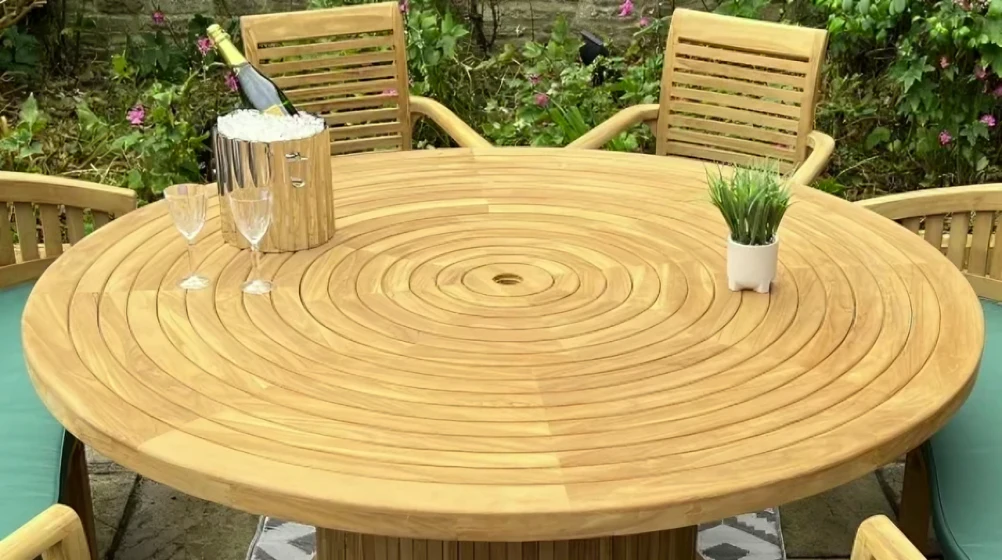
Most people buying teak garden furniture want to know one thing that the product photos never show them: what will this actually look like in a few years, left out in the British weather? The showroom piece is golden and flawless. The set that arrives at your door is golden and flawless. But teak is a natural material, and it changes. Knowing how it changes, and which changes are normal versus which ones matter, is the difference between enjoying your furniture for decades and panicking the first time you see a hairline crack.
This is a straight account of what happens to solid teak outdoors in the UK across the first ten years, and why almost none of it is anything to worry about.
First, why teak behaves the way it does
Teak is prized for outdoor use because of what is inside the wood, not what is on the surface. It contains high levels of natural oils and silica, which is why it resists water, rot and insects without needing any treatment or sealing. That natural protection is also why teak can be left outside all year in the UK, through rain, frost and damp, without being brought indoors.
But natural oils and an exposed wood surface mean the appearance is never static. Sunlight, rain and seasonal swings in temperature and humidity all act on the surface over time. The wood underneath stays strong. The surface is what tells the story of the years, and that is what people are really asking about when they ask how teak ages.
Year 1: the golden colour starts to go
The first year is when new owners are most likely to get in touch worried, because the first year is when the two most visible changes happen.
The colour begins to shift. Fresh teak has that warm, honey-gold tone. Within the first several months outdoors, that starts to fade and lighten as the surface reacts to UV light and weather. It does not happen evenly overnight; it is gradual, and pieces in full sun change faster than pieces sitting in shade. By the end of the first year most sets are noticeably lighter and heading towards a soft, muted tone rather than the original gold.
Fine surface lines may appear. This is the one that alarms people most, and it is the most important thing to understand in this whole article. Teak can develop very fine hairline cracks along the grain, known as surface checking. They appear as the surface responds to wetting, drying and temperature change. They are shallow, they run with the grain, and they are a normal characteristic of solid natural timber outdoors. They are not the wood splitting, breaking or failing. A solid teak piece with light surface checking is behaving exactly as solid teak is supposed to behave.
The reason this matters: checking is often mistaken for a fault, when it is actually a sign the furniture is solid timber rather than a coated or engineered lookalike.
Why two identical sets can age differently
Something worth knowing before we go further: two people can buy the exact same teak set on the same day and find it looks quite different a couple of years later. That is not a quality difference. It is down to where and how the furniture lives, and it explains most of the “why does mine look different from the photos” questions.
Sun exposure is the biggest factor. A set in a south-facing garden that gets sun most of the day will fade and silver noticeably faster than one tucked against a shaded north-facing wall or under a tree. More UV means quicker colour change. Neither is better or worse for the wood; they just move through the stages at different speeds.
Rain and drainage matter too. Furniture that sits where water pools, or under a tree that drips and drops sap and leaf debris, will weather differently and pick up more surface marking and green film than a set on open, free-draining paving. It is worth thinking about where a piece sits, not just which piece you buy.
Coastal gardens are their own case. Salt air is harder on most outdoor materials, and while solid teak copes with it far better than most, expect a set near the coast to weather a little more briskly than the same set inland. The metal fittings are usually the part that benefits most from occasional attention in salt-air conditions.
Covered or stored furniture ages slowest. If a set spends part of the year under a cover or in a garden room, it simply spends less time exposed, so it holds its original look longer. This is entirely optional with teak, since it does not need protecting to survive, but it does slow the visual change if that is what you want.
The practical takeaway: if you want to predict how your own set will age, look at where it is going to live. Full sun and open sky means faster to silver. Shade and shelter means slower. Both end up as sound, long-lived teak.
Years 2 to 5: settling into the silver
This is the phase where teak becomes the thing most people picture when they imagine mature garden furniture.
The patina develops. Over the second, third and fourth years the lightened surface continues to weather until it reaches the well-known soft, silvery-grey patina. This is not damage, dirt or neglect. It is a stable, natural surface layer, and a great many people specifically prefer it to the original gold. It reads as understated and timeless, which is a large part of why teak has been the classic English garden wood for so long. The important point is that the silvering is a surface effect only. It does not weaken the wood or shorten its life.
Movement is normal and settles. Natural wood expands and contracts slightly with the seasons, a little swelling in damp spells, a little shrinking in dry ones. In a well-made piece this is barely noticeable and causes no problems. It is sensible, though, to check the fittings on any outdoor furniture from time to time and gently re-tighten anything that has loosened over a season or two.
Existing surface checks may open and close slightly. The fine lines from year one can look a touch more or less pronounced depending on how wet or dry the weather has been. This is the wood breathing with the seasons. It is still cosmetic.
Years 6 to 10: mature, silvered and still solid
By this stage the furniture looks established. Fully silvered, settled, with the surface texture of wood that has genuinely lived outside, and structurally, if it is solid teak that was well made, it is still doing its job.
This is where teak quietly proves its value. Ten years outdoors is where cheaper materials have usually been replaced at least once: softwoods rotted, low-quality sets warped, fabric and coatings degraded. Solid teak that has simply been left to weather is typically still perfectly sound at ten years, and in reality has far longer to run. Teak’s working life outdoors is measured in decades, not years, which is exactly why it tends to cost more at the outset and why it is so often described as an investment rather than a purchase.
The surface at ten years carries its history: the silver patina, some fine checking, perhaps a little unevenness of tone. None of that is failure. It is the look of a material that was chosen precisely because it lasts.
Surface checking versus an actual problem: how to tell the difference
Because surface checking worries people so much, it is worth being clear about where the line sits between normal weathering and something that genuinely needs attention. In the large majority of cases it is the former, but you should know how to tell.
What normal, harmless checking looks like. It runs along the grain, in the same direction as the length of the timber. The lines are fine and shallow, more like surface texture than a gap. They may appear on tops, slats and arms where sun and rain hit most. They can look slightly more open in dry spells and tighter in damp ones. This is the wood breathing, and it does not affect strength.
What is worth a closer look. A crack running across the grain rather than along it is less usual and worth inspecting, particularly if it appears at a joint or a load-bearing point like a leg or a stretcher. Wobble that does not settle after re-tightening the fittings, a joint that has visibly opened up, or a slat that flexes far more than its neighbours are all signs to check the piece over rather than simply live with. None of these are common in well-made solid teak, but they are the things actually worth your attention, as opposed to the cosmetic checking that is not.
The simple test. Ask whether the mark is on the surface or through the structure. Surface colour change, fine lengthwise lines and a bit of tonal unevenness are all surface. A joint that moves, a component that flexes, or a split that goes across and through is structural. Surface things are teak being teak. Structural things are worth a message to wherever you bought it.
The one decision that changes everything: oil it, or leave it?
Almost every question about how teak ages comes back to this choice, so here it is plainly.
If you do nothing at all, teak will fade, silver and develop light surface checking, and it will remain structurally sound for many years regardless. Doing nothing is a completely legitimate choice. A large share of teak owners never treat their furniture and are perfectly happy with the silvered look.
If you want to keep the golden colour, that is what teak oil is for. Applied periodically, it maintains the warm original tone rather than letting it silver. Oiling is about appearance, not protection, the wood does not need it to survive. It is a preference, not a maintenance requirement.
A couple of practical points either way. A simple wash to remove dirt and any green film keeps any teak looking its best, whichever route you choose. And a pressure washer is best avoided, because too much force can roughen the surface unnecessarily.
What to actually expect, in one line
Teak outdoors in the UK goes from gold, to light, to silver, may develop fine surface checking along the way, moves gently with the seasons, and stays structurally sound through all of it for far longer than most materials last at all. The changes are the wood doing exactly what it is meant to do. Understanding that upfront is what lets you stop worrying about the surface and simply enjoy furniture built to outlast almost everything else in the garden.
Frequently asked questions
Is it normal for new teak furniture to crack? Yes. Fine hairline lines along the grain, known as surface checking, are a normal characteristic of solid teak outdoors and usually appear in the first year. They are shallow and cosmetic and do not weaken the furniture. Cracks that run across the grain or open up at a joint are less usual and worth inspecting, but lengthwise surface checking is the wood behaving exactly as expected.
How long does it take for teak to turn grey? The colour starts shifting from its original gold within the first several months outdoors, and most sets reach the full silver-grey patina somewhere across the second to fourth years. Furniture in full sun gets there faster than furniture in shade.
Do I need to oil my teak garden furniture? No. Oiling is purely about keeping the golden colour. Teak’s natural oils protect the wood without any treatment, so if you are happy for it to silver, you can leave it alone indefinitely and it will remain sound. Oil is a preference, not a requirement.
Can teak garden furniture stay outside all year in the UK? Yes. Solid teak is made for exactly this and can be left out through UK rain, frost and damp without being brought indoors. Fabric cushions are the exception and last longer if stored somewhere dry when not in use.
Does the silver patina mean the furniture is wearing out? No. The patina is a surface effect only. Underneath, the wood is unchanged and just as strong. Many people specifically choose teak for the silvered look, and if you prefer the gold you can restore it with a clean and a coat of oil.
How long will teak garden furniture actually last? Solid, well-made teak left outdoors is typically measured in decades rather than years, which is why it is so often described as an investment. At ten years a sound teak set is usually still performing well, long after cheaper materials would have needed replacing.
