🎉 Exciting News! Start with just a 10% deposit and choose a delivery date in 2026 to pay the rest. Flexibility made easy!

Parasol Buying by Garden Type: Matching Canopy Size and Base Weight to Balconies, Patios and Gardens

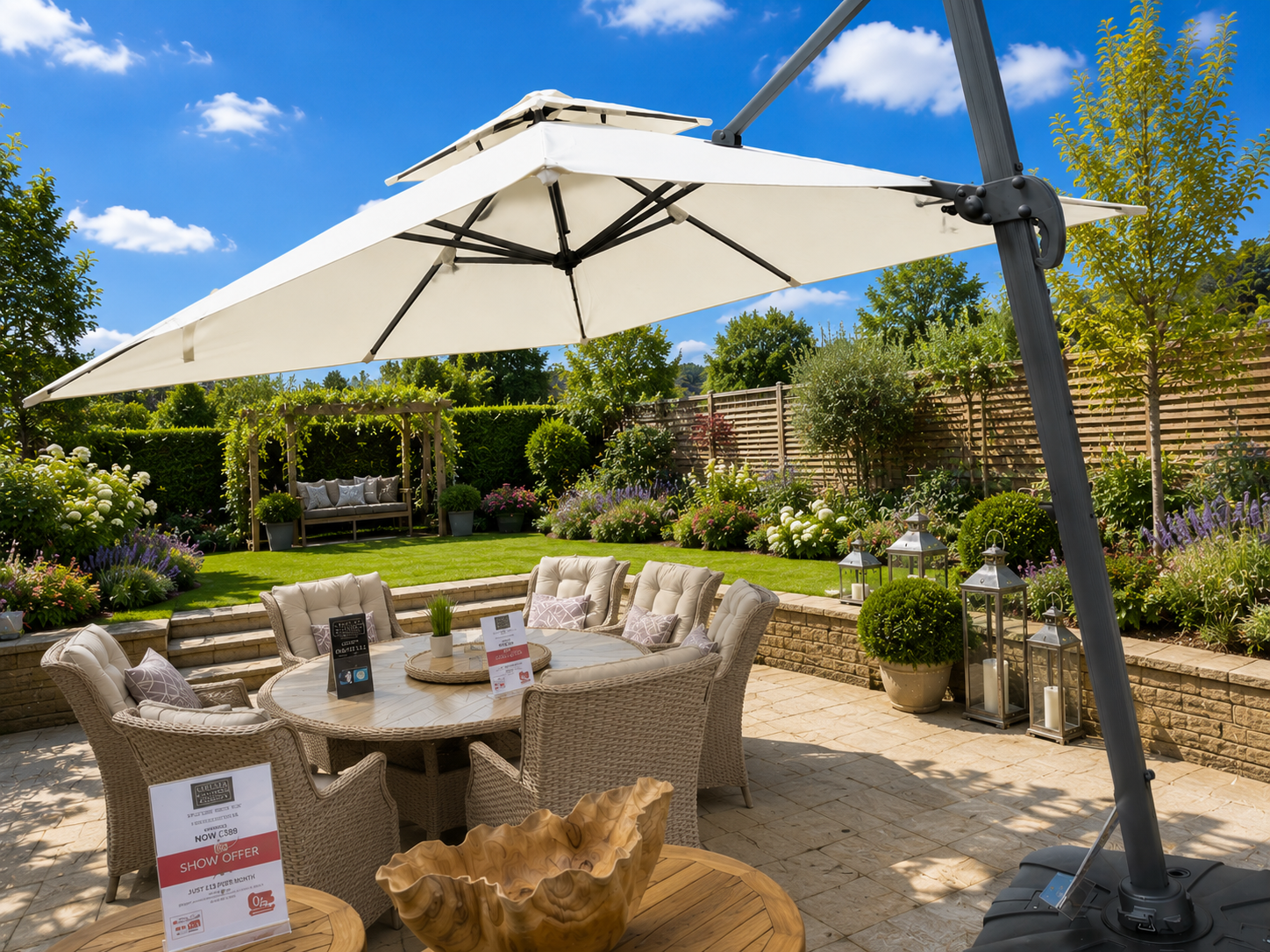
Most parasol regret comes down to two mistakes, and they are the opposite of each other. People either buy a canopy too small to actually shade the table they sit at, or they buy a good-sized canopy and pair it with a base too light to hold it, so the first gusty afternoon tips the whole thing over. Both are avoidable, and both come down to matching the parasol to the specific space it is going into rather than picking one on looks alone.
This guide works the other way round from most. Instead of starting with parasol types, it starts with your garden, because the space you have decides the size you need and the base you must not skimp on.
The two numbers that matter before anything else
Ignore colour, frame finish and features for a moment. Two measurements decide whether a parasol works: canopy size relative to what it needs to shade, and base weight relative to canopy size and how exposed your garden is. Get those two right and almost any parasol will serve you well. Get either wrong and the nicest parasol on the market will disappoint you.
Canopy size should be judged against the area you actually want shaded, not the parasol’s own dimensions in isolation. As a working rule, the canopy wants to extend roughly half a metre beyond the edge of the table or seating area on each side, because the sun moves and a canopy sized exactly to the table only shades it for one moment of the day. A canopy that looks generous over an empty patio can turn out to be too small once a full table of people is sitting under it.
Base weight is the number people underestimate most. The larger the canopy, the more sail area it presents to the wind, and the heavier the base has to be to keep it upright. A base that feels reassuringly heavy in the shop is often still too light for a big cantilever canopy in an exposed garden. When in doubt, go heavier, because the cost of getting this wrong is a toppled parasol, a cracked slab or a damaged canopy.
Balconies and very small spaces
The space: limited floor area, often a hard limit on where a base can go, and frequently more wind than people expect because balconies are raised and exposed.
Canopy: small and often asymmetric. A compact round canopy, a half-parasol designed to sit flush against a wall or railing, or a small tilting model that angles the shade without needing a wide footprint all suit balconies well. The goal is enough shade over a bistro table or a single seating spot without the canopy overhanging into a neighbour’s space or beyond the railing.
Base: this is the balcony catch. You need enough weight to be safe, but you may not have room for a large floor base, and weight limits on balconies are a genuine consideration. Options that help are wall-mounted or railing-mounted fittings that remove the need for a floor base at all, or a compact but genuinely heavy base tucked under the table. Never rely on a token base on a windy balcony. If floor space and weight are both tight, a fixed wall mount is often the safest answer.
Standard patios and average gardens
The space: a defined seating or dining area, usually reasonably sheltered by the house, fences or planting, with room for a proper base.
Canopy: this is where most people are choosing, and where matching canopy to table matters most. Size the canopy to extend beyond the table on all sides as described above. A centre-pole parasol through a table’s parasol hole is the classic, stable, good-value choice here and works for most dining sets. A cantilever, or side-post, parasol suits patios where you want the pole out of the way, or want to shade a seating area with no table hole, and it gives flexibility to swing the shade as the sun moves.
Base: with room to work with, use a base matched to the canopy size, erring on the heavier side. For a through-table centre-pole parasol, the table itself adds stability, but the base still matters. For a cantilever, the base requirement jumps up significantly because all the leverage is off to one side, so cantilever parasols typically need substantially heavier bases than an equivalent centre-pole model. Weighted or fillable bases, or heavy slab and marble bases, all work; the key is total weight, not type.
Large, open or exposed gardens
The space: big lawns, open aspects, coastal gardens, roof terraces, anywhere with little natural windbreak. This is the most demanding case and the one where corners cannot be cut.
Canopy: you can go large here for genuine coverage, and often want to, but every increase in canopy size raises the wind load. Large cantilever parasols give impressive coverage for seating areas and are popular for exactly this kind of space, but they must be treated as serious structures, not decorations. Features that earn their place in exposed gardens include a sturdy frame, a vented canopy that lets gusts pass through rather than lifting the whole thing, and a reliable crank or mechanism that is easy to close quickly.
Base: this is non-negotiable. Exposed gardens need the heaviest bases, full stop, and often a base at the top of the recommended range rather than the minimum. For large cantilever models this can mean a very substantial base or a set of weights, and it is money well spent. The other essential habit in an exposed garden is simply closing the parasol when it is not in use or when wind is forecast. No base on the market is a substitute for taking a big canopy down before a storm.
The features that are worth paying for, and the ones that are not
Once size and base are settled, features are where the money either earns its place or is wasted. A few are genuinely worth having, and a few are mostly marketing.
A vented canopy is worth it in almost any garden and essential in an exposed one. The vent is the raised section at the top that lets wind escape through the canopy instead of catching it like a sail. It reduces the chance of the parasol lifting or straining in a gust, and it costs little. If your garden gets any real wind, prioritise this.
A tilt function earns its place where the sun is low for part of the day, on east or west-facing spaces especially. Being able to angle the canopy means you can actually block low morning or evening sun rather than only overhead midday sun. On a centre-pole parasol this is genuinely useful; on some cantilever models the whole canopy rotates and tilts, which is more flexible still.
A crank or easy-open mechanism matters more than it sounds, because the easier a parasol is to open and close, the more likely you are to actually close it when you should. A parasol that is a struggle to take down is a parasol that gets left up in wind it should not be up in. Smooth operation is a safety feature, not just a convenience.
Frame material is worth a glance. Aluminium frames resist rust and stay light, which suits the UK climate and makes the parasol easier to handle. Steel frames can be sturdy but need to be well protected against corrosion. Timber frames look beautiful and suit traditional gardens, though they ask for a little more care.
The features that matter least are usually cosmetic upgrades and gadget extras. Integrated lights can be a pleasant touch for evening use, but they are a nice-to-have, not a reason to compromise on canopy size or base weight. Never trade the two things that actually decide whether a parasol works, size and stability, for a feature that only affects how it looks.
Centre-pole versus cantilever, in short
Since the choice comes up in every garden type: a centre-pole parasol runs up through the middle of a table, is stable, simple and good value, and is the natural pick when you have a table with a parasol hole. A cantilever parasol is supported from the side, leaving the space beneath clear, and is the better pick for shading seating without a table hole or where you want to move the shade around, at the cost of needing a much heavier base and a bit more room. Neither is better overall; they suit different spaces.
Quick reference: garden type to parasol and base
| Garden type | Canopy | Base priority | Watch out for |
| Balcony / very small | Small, asymmetric, tilting, or wall/railing mount | Wall or railing mount if possible; otherwise compact but heavy | Wind is worse than expected; balcony weight limits |
| Standard patio | Sized to overhang table on all sides; centre-pole or cantilever | Matched to canopy, err heavier; table helps with centre-pole | Canopy too small once table is full |
| Large / open / exposed | Large canopy fine, but vented and sturdy | Heaviest available; top of recommended range | Underweight base; not closing it before wind |
Looking after a parasol so it lasts
A parasol is one of the easier pieces of outdoor kit to keep in good condition, and a little habit goes a long way.
The single most important habit is closing it when it is not in use, and always when wind is forecast. This does more for a parasol’s lifespan than anything else, protecting both the canopy fabric from unnecessary weathering and the whole structure from wind damage. A parasol left open and unattended through a windy week is asking for trouble.
Let the canopy dry before you close it away for long periods where you can, because folding a wet canopy and leaving it shut for weeks encourages mildew and staining. If it does need to be closed while damp, opening it again to dry on the next fine day keeps the fabric fresh.
Clean the canopy occasionally with mild soapy water and a soft brush to lift dirt, bird mess and the beginnings of any green film. Avoid harsh chemicals and pressure washing, which can damage the fabric and its water resistance. For winter, a parasol cover or storing the parasol somewhere dry protects the fabric through the months it is not being used, and keeps it looking new for far longer.
Give the mechanism an occasional check too. Keeping the crank, ribs and any tilt joint clean and free of grit means the parasol keeps opening and closing smoothly, which, as above, is the thing that makes you more likely to close it when you should.
Frequently asked questions
What size parasol do I need for my table? Size the canopy so it extends roughly half a metre beyond the edge of the table on every side, not just to the table’s own dimensions. Because the sun moves through the day, a canopy sized exactly to the table only shades it for a moment. Measure the table, then choose a canopy comfortably larger.
How heavy should a parasol base be? Heavier than you think, and heavier the larger the canopy. Cantilever parasols need substantially heavier bases than centre-pole models of the same canopy size because all the leverage sits to one side. In exposed or coastal gardens, go to the top of the recommended base weight rather than the minimum.
Will a parasol blow over? It can, if the base is too light for the canopy or the garden is exposed, which is the single most common cause of parasol damage. The fixes are a correctly heavy base, a vented canopy that lets gusts through, and the simple habit of closing the parasol when it is not in use or when wind is forecast. No base removes the need to take a large canopy down before a storm.
Can I use a parasol on a balcony? Yes, but choose a compact or asymmetric canopy and pay close attention to the base. Wall-mounted or railing-mounted fittings are often the safest option because they avoid needing a heavy floor base, which balconies may not have room for and which can run into balcony weight limits.
Is a cantilever or centre-pole parasol better? Neither is better overall. A centre-pole parasol is stable, simple and good value and suits a table with a parasol hole. A cantilever keeps the space beneath clear and lets you move the shade around, which suits seating areas, but it needs a much heavier base and more room.
What is a vented parasol and do I need one? A vented parasol has a raised opening at the top of the canopy that lets wind pass through rather than catching it like a sail. It reduces strain and the chance of the parasol lifting in a gust, and it costs little. If your garden gets any real wind, it is well worth having.
