🎉 Exciting News! Start with just a 10% deposit and choose a delivery date in 2026 to pay the rest. Flexibility made easy!

How Much Should You Spend on Garden Furniture?

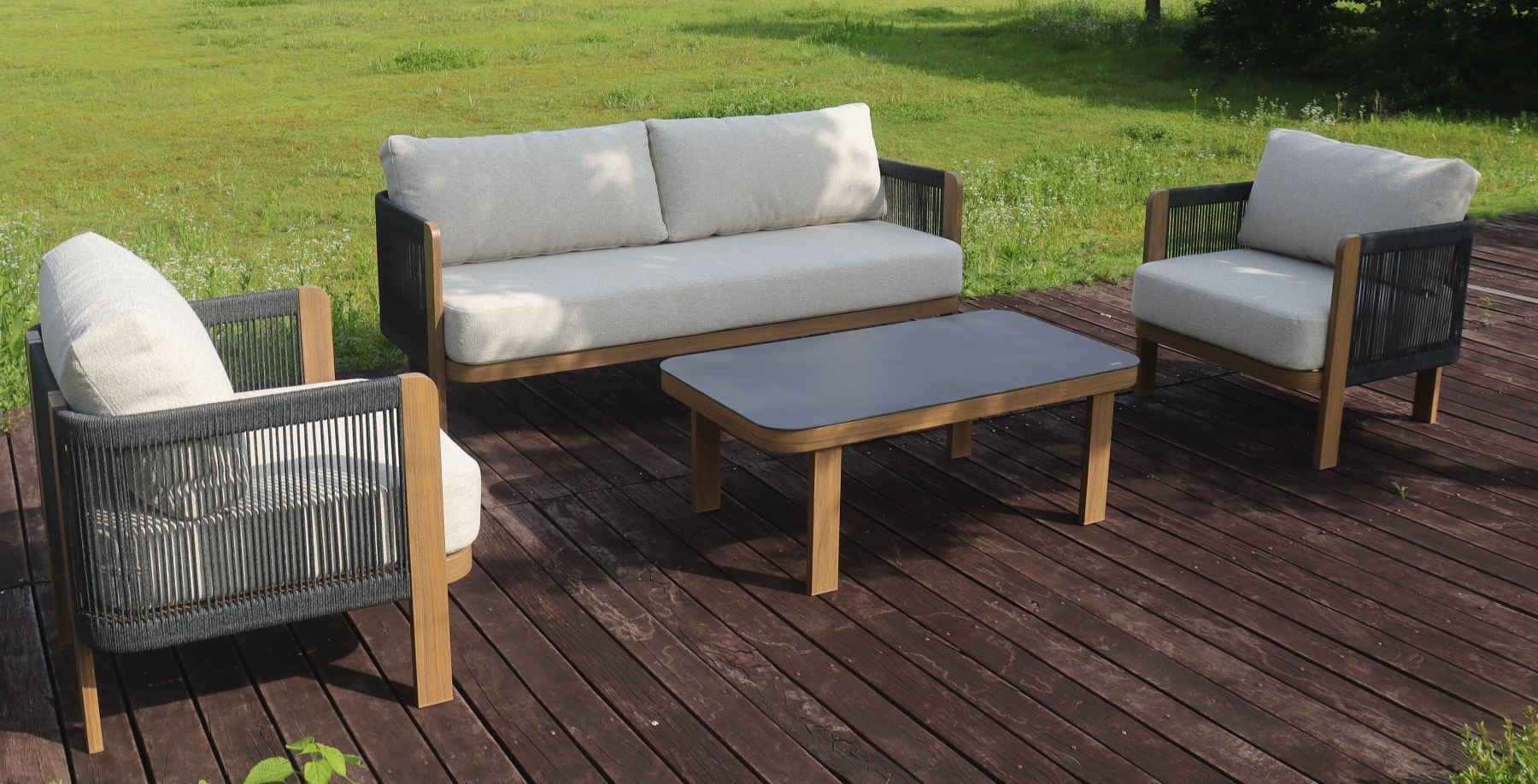
The honest answer to “how much should I spend on garden furniture” is not a number. It is a different question: how much will this furniture cost me per year of actual use? A cheap set that looks tired after two summers and gets thrown out is not cheap. A more expensive set that is still in daily use a decade later, having cost nothing to maintain, can work out as the least expensive thing in the garden. Sticker price tells you almost nothing on its own.
This is a straightforward way to think about the real cost of garden furniture, comparing the main materials not on what they cost to buy, but on what they cost to own over their working life.
Why cost-per-year is the number that matters
Cost-per-year is simple: what you paid, plus what you spend maintaining or replacing it, divided by the number of years you actually use it. It cuts through the thing that misleads most buyers, which is that the cheapest option to buy is very rarely the cheapest option to own.
Three things drive the real cost of any garden furniture over time: how long it lasts before it needs replacing, how much maintenance it demands to get there, and how well it holds up cosmetically so you still want to use it rather than replace it early out of sheer boredom or embarrassment. A material can score well on one and badly on another. The material that wins over ten years is usually the one that is quietly strong on all three.
The materials, and how they really cost out
Here is how the common garden furniture materials tend to behave over a working life in the UK climate. Prices vary too much to quote, so this focuses on lifespan, maintenance and how the cost-per-year logic plays out.
Solid teak is the classic long-life choice. Higher to buy, but its natural oils mean it resists rot and weather without treatment and it can be left outside all year. A solid, well-made teak set is typically measured in decades of outdoor life, and needs little more than an occasional clean, with oiling being optional and only about keeping the golden colour. Because the lifespan is so long and maintenance so low, a high purchase price spreads across many years and the cost-per-year usually lands low. This is precisely why teak is so often described as an investment rather than a purchase.
Quality synthetic rattan, on the right frame, is designed to handle UV and moisture far better than the natural wicker of years ago, and a quality set holds up well outdoors with simple care. Lifespan sits comfortably in the mid-range and can be long if the frame is sound and cushions are looked after. Maintenance is light: keep it clean, store or protect cushions, and it repays you. The cost-per-year is generally good, especially for the comfort and the look. The caveat is that “rattan” covers a huge quality range, and a cheap set with a poor frame and thin weave is where the short-lifespan, false-economy trap lives.
Aluminium is a quietly excellent performer on cost-per-year because it does not rust, stays light, and needs very little upkeep. A powder-coated aluminium frame shrugs off UK weather and lasts well, making it a low-maintenance, long-life option, often paired with rattan weave or with cushions. If you want durability with minimal fuss and less weight than teak, aluminium earns its place.
Softwood, such as pine, is cheapest to buy and the most expensive to own. Softwood needs regular treatment to survive outdoors, and even then it is prone to rot, warping and a short outdoor life compared with the options above. Skip the treatment and it deteriorates quickly. The low purchase price divided by a short lifespan, plus ongoing treatment costs, means the cost-per-year is often worse than materials that cost several times more upfront. This is the classic false economy.
Steel that is not galvanised or well coated can look great and cost little, but rust is the enemy. Unless it is properly protected and kept that way, corrosion shortens its life and spoils the appearance. Well-protected steel can last; poorly protected steel is another short-lifespan trap.
The comparison, at a glance
| Material | Buy cost | Maintenance | Typical outdoor lifespan | Cost-per-year logic |
| Solid teak | High | Very low (clean; oil optional) | Decades | High price divided by very long life equals low per year |
| Quality synthetic rattan | Mid | Low (clean; care for cushions) | Mid to long, if frame is good | Good value, especially for comfort |
| Aluminium | Mid | Very low | Long | Low upkeep plus long life equals strong value |
| Softwood | Low | High (regular treatment) | Short | Low price divided by short life plus upkeep is often poor |
| Unprotected steel | Low | High (rust management) | Short unless well coated | Cheap to buy, costly to keep |
Where to spend and where to save within a single set
Cost-per-year is not only a choice between materials. Within one set, some parts are worth spending on and others are not, and knowing which is which stretches a budget a long way.
Spend on the structure. The frame and the material of the furniture itself are what determine whether the set survives, so this is where the money belongs. A rust-proof frame and a genuinely weather-suited material like solid teak or quality synthetic rattan are the difference between a set that lasts a decade and one that lasts two summers. This is not the place to economise.
Worry less about the cushions, because they are consumable. On almost any set the cushions are the first thing to wear out, fade or need replacing, regardless of how much you paid. That is normal, and it means there is little point paying a large premium expecting cushions to last as long as the furniture. It is more useful to check that replacement cushions and covers are available for the set, so you can refresh them cheaply in a few years rather than replacing the whole thing.
Buy accessories to protect the investment, not to decorate it. A good cover, and somewhere dry to store cushions, cost little and directly extend the life of the expensive part. In cost-per-year terms, a modest spend on protection that adds years to a set is some of the best value available.
Matching the spend to how you will actually use it
The useful way to set a budget is to work backwards from how long you want the furniture to last and how much upkeep you are willing to do.
If you want furniture you can buy once and largely forget about for a decade or more, it is worth spending more upfront on a long-life, low-maintenance material, because the cost-per-year will reward you and you will not be furniture-shopping again soon. Teak and quality aluminium suit this buyer best.
If you know you will refresh your outdoor look every few years anyway, or you are furnishing a space you use only occasionally, a mid-range option makes sense and there is no need to over-invest. Quality synthetic rattan often fits this middle ground well, giving comfort and looks without the top-end price.
If you are furnishing a rental, a starter home or a space you are unsure about, it is reasonable to spend less, as long as you go in knowing the set is short-lived and you are effectively renting a few summers rather than buying for the long term.
The one approach that reliably disappoints is buying the cheapest thing available for a space you will use heavily and expect to last, because that is exactly where the false economy bites hardest.
There is also a comfort and enjoyment dimension that pure numbers miss. Furniture you find comfortable and genuinely like looking at gets used, and furniture that gets used is worth the money almost regardless of the maths. A set that is technically durable but that you never sit on is poor value at any price. Factor in how you will actually live with it, not just how long it will survive.
Frequently asked questions
What is the most cost-effective garden furniture over time? The materials that last longest with the least maintenance tend to win on cost-per-year, even when they cost more to buy. Solid teak and good-quality aluminium are strong on this measure because both have long outdoor lifespans and very low upkeep. The cheapest options to buy, like untreated softwood, are often the most expensive to own because they need regular treatment and do not last.
Is expensive garden furniture worth it? It can be, if the higher price buys a materially longer life and lower maintenance, because the cost spreads across many more years of use. A durable set that lasts a decade or more can work out cheaper per year than a budget set replaced every couple of summers. The key is matching the spend to how long you actually want the furniture to last.
How long should garden furniture last? It depends heavily on the material. Well-made solid teak and quality aluminium are measured in many years to decades of outdoor use, quality synthetic rattan sits in a strong mid-to-long range if the frame is sound, and untreated softwood is typically much shorter-lived. Lifespan, not sticker price, is what determines real value.
What garden furniture is best for the UK climate? Materials that cope with rain, damp and frost without constant attention do best. Solid teak, powder-coated aluminium and quality synthetic rattan all handle UK conditions well with minimal care. The materials that struggle are those prone to rot or rust, such as untreated softwood and poorly protected steel.
Do I need to spend a lot to get durable garden furniture? Not necessarily a lot, but be wary of the very cheapest options for furniture you will use heavily and want to keep. Durability comes from the material and how it is made, so it is better to match your budget to a genuinely weather-suited material than to buy the cheapest set and replace it repeatedly.
Which part of a garden furniture set is worth spending the most on? The structure, meaning the frame and the core material, because that is what determines whether the set survives the years. Cushions are consumable and will need replacing whatever you pay, so it is better to put the budget into a rust-proof frame and a weather-suited material and simply refresh cushions later.
