🎉 Exciting News! Start with just a 10% deposit and choose a delivery date in 2026 to pay the rest. Flexibility made easy!

Choosing Teak Garden Furniture: What 15 Years of Testing Taught Me

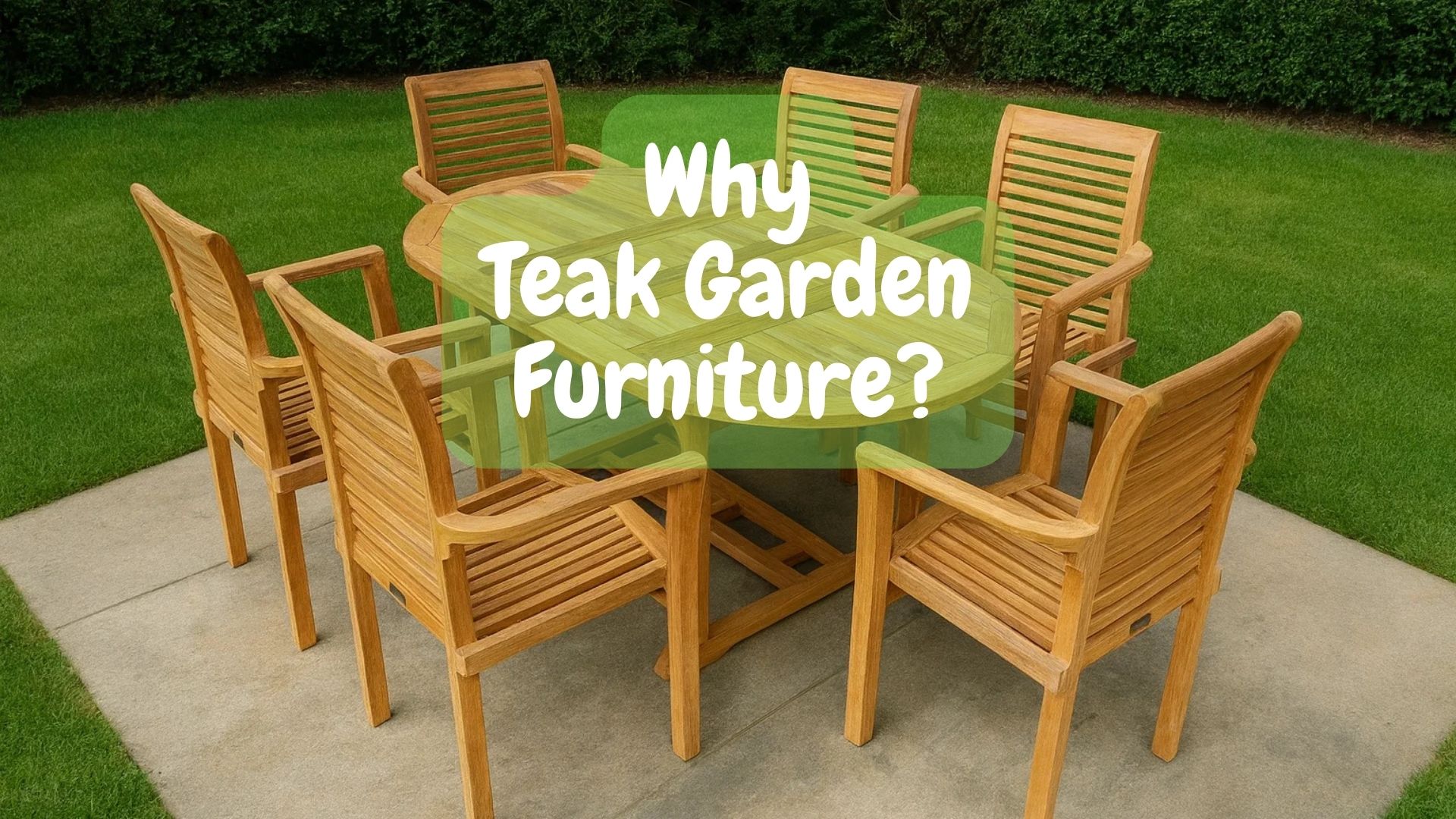
I bought my first teak dining set in 2011. It cost more than I wanted to spend, sat untreated through 15 British winters, and still looks better than furniture I bought three years ago.
That experience started an obsession. Over the years, I’ve tested dozens of pieces across different price points, construction methods, and wood grades. I have seen what holds up and what doesn’t. I have made expensive mistakes so you don’t have to.
This isn’t a shopping guide with product recommendations. It’s what I wish someone had told me before I started buying garden furniture.
The Teak Reality Check
Teak has a reputation for being indestructible. That’s mostly deserved, but with important caveats.
Real teak—heartwood from mature trees—contains natural oils that repel water and resist decay. The wood is dense, stable, and genuinely weatherproof. Leave it outside for a decade and it will develop a silver patina while remaining structurally sound.
But not all teak furniture uses real teak heartwood throughout. Some manufacturers use sapwood (the outer, lighter-colored wood) mixed with heartwood. Sapwood lacks the oil content and degrades much faster outdoors.
Other pieces are “teak” in name only—thin teak veneer over cheaper wood or composite materials. These might last 3-5 years before the veneer delaminates and the base material deteriorates.
The price difference between these approaches is substantial. So is the lifespan difference.
What Actually Matters in Construction
After testing various pieces, certain construction details emerged as reliable quality indicators:
Joinery Methods
How pieces connect determines how long they last.
Mortise and tenon joints are the gold standard. A shaped peg (tenon) fits into a matching hole (mortise), creating mechanical strength that doesn’t rely solely on adhesives. My 15-year-old table uses these joints. They’re still tight with no wobble.
Dowel joints are acceptable for lighter-duty pieces. Wooden pegs connect components. Less robust than mortise and tenon but adequate for chairs and smaller tables.
Screws and brackets are red flags for outdoor furniture. Metal fasteners hidden in wood create points where moisture can penetrate. I’ve seen teak chairs with screw joints develop cracks radiating from fastener points after 4-5 years.
You usually can’t see the joinery in assembled furniture, but you can test it. Apply gentle pressure to joints—pushing chair backs, twisting table legs. Quality joinery feels solid with no flex or movement. Poor joinery shows play immediately, and it only gets worse over time.
Grade A vs. Grade B vs. Grade C
Teak grading isn’t standardized, which makes it confusing. But general principles hold:
Grade A (or “Premium”) uses heartwood exclusively. Rich golden-brown color, high oil content, dense grain. This is what you want for furniture that will last decades.
Grade B mixes heartwood with some sapwood. Lighter color variation, lower oil content. Still decent for outdoor use but won’t age as gracefully.
Grade C includes significant sapwood and younger wood. Much cheaper, but durability drops sharply. Fine for decorative pieces or temporary furniture, not for investment pieces.
One simple test: look at end grain (the cut surface at the end of a board). Heartwood is consistently dark. Sapwood shows as lighter rings. The more light wood you see, the lower the grade.
Hardware Quality
Even excellent wood fails if the hardware is cheap.
Stainless steel is mandatory for outdoor furniture. Regular steel rusts. “Rust-resistant” coatings eventually fail. I’ve replaced hinges, brackets, and extension mechanisms on otherwise good furniture because manufacturers used plated steel instead of stainless.
Extension mechanisms on tables deserve special attention. Cheap slides bind up, corrode, or fail mechanically. Quality mechanisms—usually ball-bearing slides in stainless steel—operate smoothly for decades. Test them thoroughly before buying. If they feel sticky or rough when new, imagine them after moisture exposure.
Configurations That Actually Work
I’ve owned or extensively tested most common teak furniture configurations. Here’s what I’ve learned:
Rectangular Extending Tables
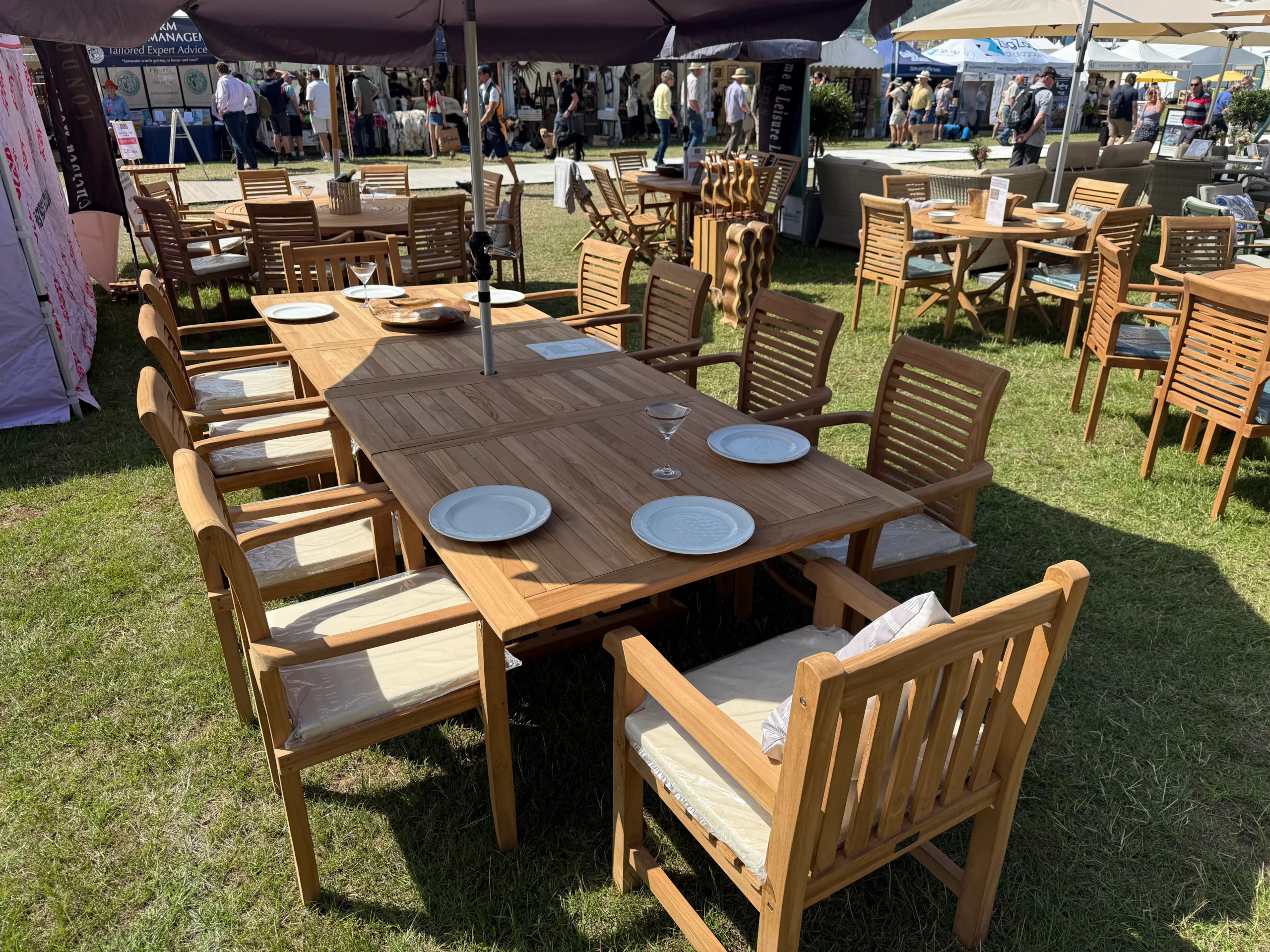
These represent the best value for most households. Compact enough for daily use, large enough for entertaining when extended.
The extension mechanism matters enormously. Butterfly leaves (hinged sections stored under the table) are elegant but have more parts that can fail. Separate leaf inserts are more robust but require storage space.
After 10 years, my butterfly-leaf table still extends smoothly, but I’ve replaced the catch mechanism twice. A friend’s separate-leaf table has never needed repairs but requires garage storage for the leaves.
For families that entertain occasionally, extending tables solve the capacity problem without dominating the garden when not in use.
Round Tables
Round tables excel at creating inclusive dining atmospheres. Everyone is equidistant from the center. Conversation flows more naturally than at rectangular tables where people at opposite ends are separated.
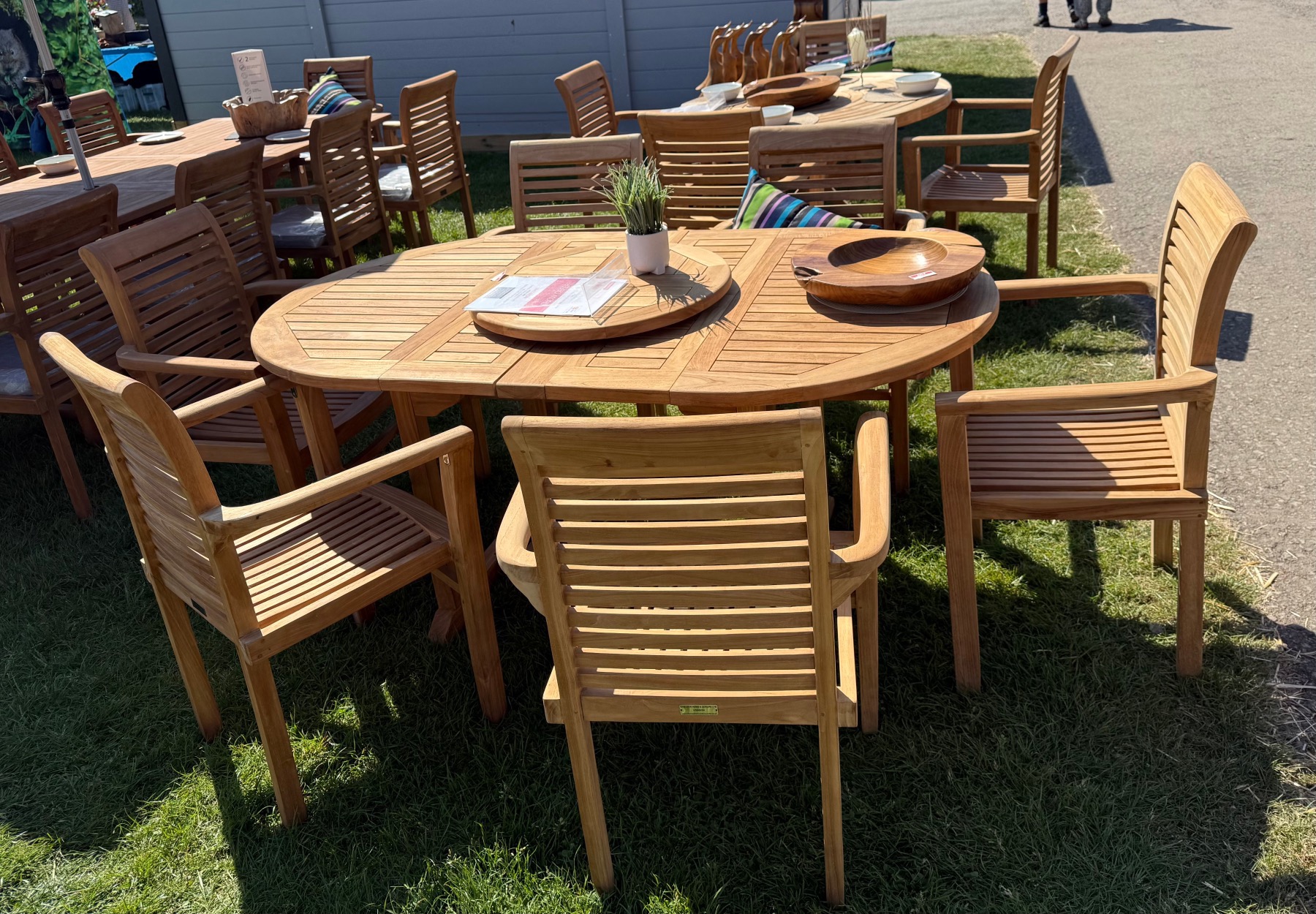
The trade-off is capacity. A round table seating eight requires a diameter around 150-180cm. That’s a large footprint for everyday use. You can’t tuck it against a wall or in a corner to save space.
I tested a 180cm round table for two years. Brilliant for dinner parties. Slightly overwhelming for daily breakfast with two people. If your garden space is generous and you prioritize social dining, it’s worth the footprint.
Folding Furniture
Modern folding teak furniture has come remarkably far. Early versions were flimsy and unstable. Current quality examples are robust when deployed.
I’ve tested a folding table and four folding chairs for three years. The folding mechanism operates smoothly, and stability when set up matches fixed furniture. The ability to completely clear the patio for other activities proved more valuable than I anticipated.
The caveat: folding mechanisms add complexity. More moving parts mean more potential failure points. I’ve replaced two hinge pins that wore loose. But the convenience outweighs occasional maintenance for my usage pattern.
Benches vs. Chairs
Benches make efficient use of space and accommodate flexible seating. Three people can squeeze onto a bench designed for two if needed.
Chairs provide more comfort for extended dining and easier entry and exit. Older guests particularly appreciate chairs over benches.
After years of testing both, I’ve settled on mixed configurations—benches on the long sides of rectangular tables, chairs at the ends. This balances efficiency with comfort and creates visual interest.
The Maintenance Reality
Teak’s reputation for being “maintenance-free” is somewhat misleading.
If you’re happy with the silvery-gray weathered appearance, then yes, teak requires essentially no maintenance. Leave it outside, ignore it, and it will be fine for decades. The patina is just surface color change; the wood underneath remains sound.
If you want to maintain the golden-honey color, expect to oil annually. This takes several hours for a dining set and requires reapplication every 12-18 months depending on weather exposure.
I maintained the golden color for the first five years, then stopped. The weathered silver looks distinguished, and I don’t miss the maintenance schedule. But this is personal preference—some people strongly prefer the warm tones and gladly invest the time.
Cleaning
Basic cleaning is genuinely simple. Soap and water with a soft brush handles everything except the most stubborn staining.
For deeper cleaning (before oiling or removing accumulated grime), teak cleaners work well. These are typically oxalic acid-based solutions that brighten the wood. I clean thoroughly once a year in spring, which takes about an hour for a full dining set.
Avoid pressure washers. The high-pressure water can damage wood fibers and force moisture deep into joints. I learned this the hard way on a bench, creating a fuzzy surface texture that took months of weathering to smooth out again.
What I Got Wrong
Mistake 1: Buying Matching Everything
My first purchase was a complete matching set—table, six chairs, serving cart, all from the same line. It looked beautiful initially, but the uniformity became boring.
Over time, I’ve mixed pieces from different manufacturers and even different materials. Teak table with metal chairs. Teak benches with a composite table. The eclectic mix has more character and lets me prioritize quality for the pieces that matter most.
Mistake 2: Underestimating Size
I bought a table that seemed perfectly sized in the showroom. In my garden, it dominated the space and made the patio feel cramped.
Measure carefully and mark out the dimensions in your actual space before buying. Include clearance for chairs when pulled back. A table that’s two meters long needs at least 3.5 meters of patio length to accommodate chairs and movement.
Mistake 3: Ignoring Cushions Initially
I thought teak furniture should be used “as is” without cushions. After a few long dinner parties, my back disagreed.
Quality outdoor cushions transform comfort without compromising the furniture’s aesthetic. I now consider cushions essential, not optional, which adds to the total investment but dramatically improves usability.
Mistake 4: Buying One Size Too Small
I bought a six-seater table thinking that was adequate for our family of four. Then we wanted to invite friends for dinner. Then extended family visited.
Every single person I’ve discussed this with has the same regret—buying slightly too small. If you’re between sizes, go larger. The times you need the extra capacity justify having slightly more table than necessary day-to-day.
Quality Indicators You Can Check
When evaluating furniture in person:
Weight: Quality teak is dense and heavy. A dining chair should be noticeably hefty. If furniture feels surprisingly light, the wood is either low-grade teak or not teak at all.
Smell: Fresh teak has a distinctive leather-like smell from the natural oils. No smell or a chemical odor suggests low oil content or added treatments.
Surface texture: Run your hand across the wood. It should feel smooth but not slippery (which indicates surface treatments). A slight natural resistance from the grain is normal.
Color consistency: Heartwood has rich, consistent golden-brown tones. Obvious color variation with lighter sections suggests mixed grades.
End grain: Look at the cut ends of boards. Tight, dense grain indicates quality. Wide, loose grain suggests fast-grown plantation wood with less durability.
Finish quality: Check edges and joints for smoothness. Quality manufacturers sand thoroughly and ease sharp edges. Rough spots or splintery edges indicate rushed manufacturing.
The Sizing Decision
This is where most people struggle, including me initially.
For a family of four, a six to eight-seater table provides adequate capacity for daily use plus occasional guests. An extending table in this range offers maximum flexibility.
For regular entertainers, ten to twelve-seater configurations make sense. The furniture might seem oversized for daily breakfast, but that’s the trade-off for not needing to rearrange everything when hosting.
For couples or small spaces, four-seater tables are perfectly adequate. Don’t feel pressured into larger furniture that overwhelms your garden. A well-chosen small set beats a cramped large one.
Storage Considerations
Quality teak absolutely survives year-round outdoor exposure. My oldest pieces have never been stored and remain in excellent condition.
That said, storage extends life, particularly for folding mechanisms, hardware, and cushions. If you have space available, bringing furniture in during the wettest winter months is worthwhile.
Furniture covers are a reasonable middle ground. They protect against the worst weather while allowing the wood to breathe. I use covers during December through February and leave everything uncovered the rest of the year.
Stacking chairs earn their price premium if storage matters. The ability to stack six chairs in the space of one makes winter storage practical even with limited space.
When Price Actually Reflects Quality
Cheap teak furniture exists, but there’s always a reason for the low price:
-
Mixed sapwood/heartwood construction
-
Inferior joinery methods
-
Lower grade materials
-
Thinner wood sections
-
Cheap hardware
These pieces might look similar to premium furniture when new, but durability suffers dramatically. I’ve seen budget teak chairs develop joint failures within three years while my premium chairs show no wear after fifteen.
The pricing sweet spot, in my experience, falls in the mid-range—not the cheapest options, but not ultra-premium either. This captures solid heartwood construction and quality joinery without paying for brand premiums or elaborate design elements.
The Sustainability Question
Teak’s environmental profile depends entirely on sourcing.
Old-growth teak harvested from natural forests is environmentally destructive and thankfully increasingly rare due to international protections. Most furniture now uses plantation teak from managed forests in Indonesia, Myanmar, and other tropical regions.
Responsible manufacturers provide sourcing information. Look for FSC (Forest Stewardship Council) certification or similar documentation. If a manufacturer can’t or won’t tell you where their teak comes from, that’s concerning.
The longevity factor matters too. Furniture lasting 20-30 years has far less environmental impact than cheap alternatives replaced every few years, even if the individual pieces use “greener” materials.
What I’d Buy Today
If I were starting over with current knowledge:
For daily family use: An eight-seater rectangular extending table with mixed chairs and benches. Large enough for regular entertaining, compact enough when contracted for everyday use.
For small spaces: A four-seater folding table with stacking chairs. Maximum flexibility, minimal committed footprint.
For large entertaining: A twelve-seater fixed rectangular table with all chairs. The extending mechanisms at this size become cumbersome. If you need this capacity, commit to it.
For social dining: An eight to ten-seater round table with stacking chairs. The inclusive atmosphere justifies the large footprint if your garden accommodates it.
In every case, I’d prioritize solid heartwood construction and quality joinery over design details or brand names. The fundamentals matter more than aesthetics for furniture that needs to survive decades outdoors.
The Long View
Garden furniture represents one of the few purchases where spending more upfront genuinely saves money long-term.
My 15-year-old teak table cost £1,200 in 2011—a significant sum that made me hesitate. But calculate the per-year cost: £80 annually for furniture that still looks great and will easily last another 15 years. Compare that to replacing £300 furniture every three years—£100 annually plus the hassle of shopping and disposal.
Quality teak furniture becomes more economical the longer you own it. And there’s genuine satisfaction in furniture that improves with age rather than deteriorating.
Finding Your Right Configuration
Choosing teak furniture ultimately comes down to honest assessment of your space, usage patterns, and priorities.
Measure your available space carefully, including clearance for movement. Consider your typical number of diners versus occasional maximum. Think about storage capabilities and whether you’ll maintain the golden color or embrace the weathered patina.
Test furniture in person when possible. Sit in chairs. Extend tables. Feel the weight and construction. Photos don’t convey the quality differences that become obvious when handling the actual pieces.
And remember that you’re not just buying furniture—you’re investing in outdoor living space that will host countless meals, conversations, and memories over the next several decades. Taking time to choose well pays dividends every time you step into your garden.
After 15 years of testing teak furniture through British weather, I’m happy to answer specific questions about construction, maintenance, or choosing the right configuration for your space. What works in my garden might not work in yours, but the fundamental quality indicators remain consistent.