🎉 Exciting News! Start with just a 10% deposit and choose a delivery date in 2026 to pay the rest. Flexibility made easy!

How Rattan Furniture Is Actually Made: A Factory Floor Perspective

Last summer, I spent three weeks visiting furniture manufacturing facilities across Southeast Asia. Walking through those factories – watching weavers work, smelling the heat from extrusion machines, feeling the difference between cheap and quality materials – changed how I understand outdoor furniture completely.
If you have ever wondered why some garden chairs last a decade while others crack after one season, the answer isn’t just about price. It’s about what happens in the factory, and most buyers have no idea what to look for.
The Natural vs. Synthetic Confusion
First, let’s clear up the biggest misconception: that wicker chair on your patio isn’t made from vines anymore.
Real rattan comes from climbing palms in tropical rainforests. It’s beautiful indoors but deteriorates quickly outside. Rain makes it swell and crack. UV rays bleach and weaken it. One cold winter and the whole piece can become brittle.
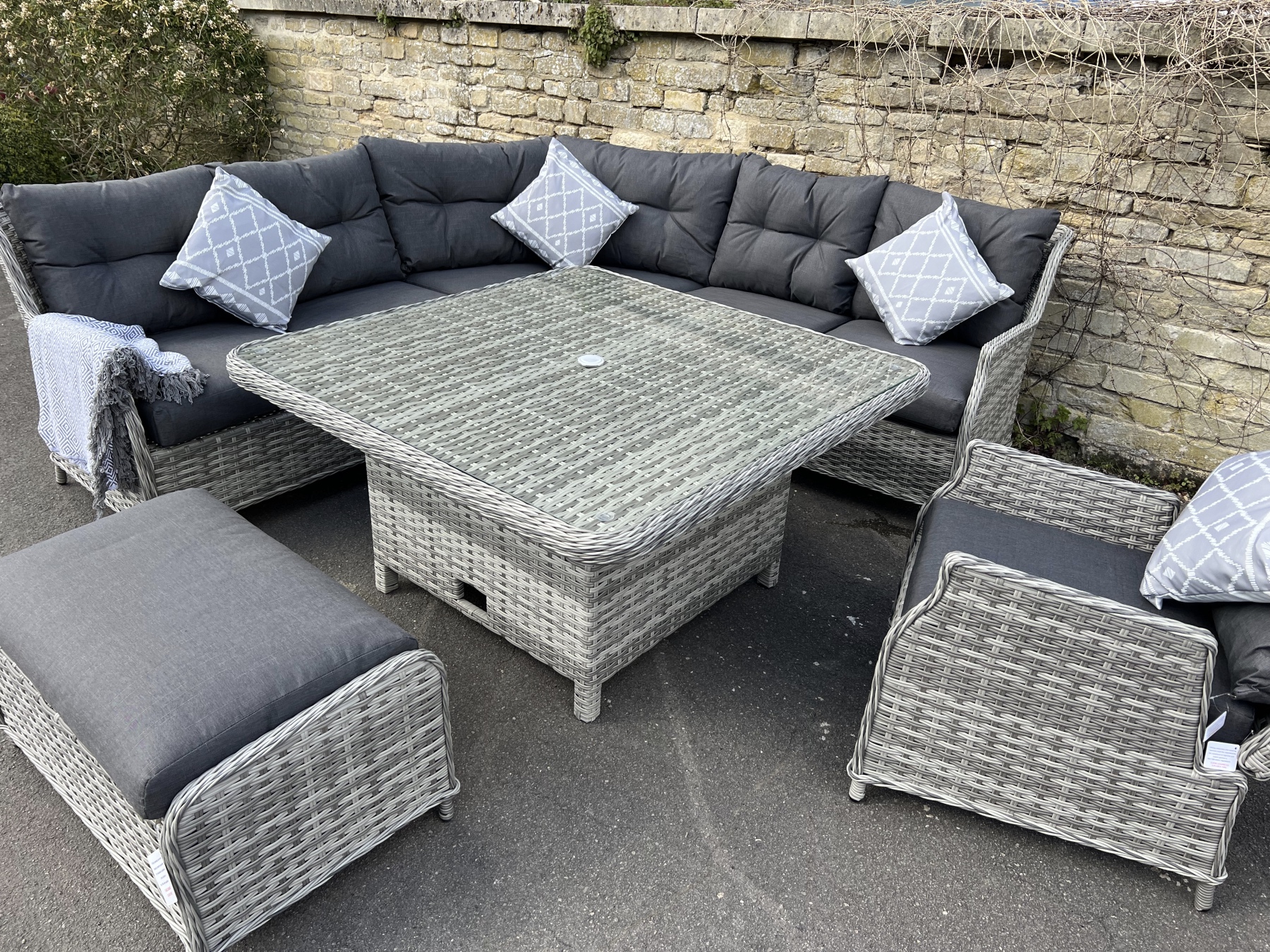
That’s why virtually everything marketed as “rattan garden furniture” today is synthetic. Made from polyethylene (PE) plastic, it mimics the look of natural rattan while actually surviving outdoors. When you see “PE rattan” or “poly rattan” or “all-weather wicker,” they’re all talking about the same thing: plastic strands woven to look like the real thing.
Is this misleading? Maybe. But it’s also honest about what works. I have tested natural rattan outdoors in UK weather. It doesn’t make it through one season looking decent.
What Actually Happens in the Factory
Creating the Strands
Manufacturing starts with polyethylene pellets—basically, plastic beads. These get melted down and mixed with additives:
- UV stabilizers that prevent sun damage
- Colorants that go all the way through (not just surface coating)
- Plasticizers that keep the material flexible
The mixture gets forced through an extruder—think of it like a pasta maker for plastic. Dies shape the molten material into continuous strands. These can be flat, round, half-round, or textured, depending on what look the manufacturer wants.
Here’s where quality diverges dramatically. Cheap factories skip the UV stabilizers or use minimal amounts. The strands look identical when new but fade to gray within a year. Quality manufacturers load up on stabilizers. I saw one factory using triple the standard amount—their furniture costs more but literally maintains color for 10+ years.
You cannot tell the difference by looking at new furniture. This is why cheap and expensive pieces look identical in the showroom.
Building the Frame
While strands are being extruded, frames are fabricated separately. Two materials dominate:
Steel frames (budget option): Heavier, prone to rust even with powder coating. Any chip in the coating lets moisture in, and rust spreads underneath. I’ve seen steel-framed furniture rust from the inside out while looking fine externally.
Aluminum frames (quality option): Naturally rust-resistant, lightweight, strong. More expensive to source and work with, but the only real choice for longevity.
Frame construction involves cutting tubing to length, welding corners and joints, then powder coating the entire skeleton. The powder coating isn’t just aesthetic—it’s another weather barrier.
One detail that separates quality: reinforcement bars. Budget frames use the minimum structure needed. You sit down, the chair holds you, it passes. Quality frames add cross-bracing and reinforcement at stress points. The furniture feels solid rather than adequate.
The Weaving Process
This is where craft meets manufacturing, and where I gained real respect for the process.
I watched a weaver named Lin work on dining chairs for eight hours. Her hands moved constantly—wrapping strands around the frame, pulling them tight, securing them, moving to the next section. The rhythm was hypnotic, but also intensely precise.
Tension matters enormously. Too loose and the weave sags under weight. Too tight and you stress both the strand and the frame. Lin could feel the correct tension through her hands. She’d been weaving for 12 years.
The factory employed 40 weavers. Some had been there two months. Their work looked fine to my untrained eye, but Lin pointed out inconsistencies—slight variations in tension, small gaps in the pattern, areas where the weave would loosen over time.
A single dining chair took Lin about 3-4 hours. An inexperienced weaver needed 6-7 hours and produced noticeably inferior results.
This is why machine-weaving hasn’t replaced humans. Companies have tried. The machines can do simple, repetitive patterns on flat surfaces. But furniture involves curves, corners, connection points. Machines struggle with the variability. Skilled humans adapt instantly.
Quality Control (or Lack Thereof)
In the quality-focused factories I visited, every piece got inspected after weaving. Workers checked:
- Consistent tension by pressing different areas
- Secure attachment at frame contact points
- Smooth surfaces without rough edges
- Structural integrity under weight testing
Pieces that failed went back to the weaver for correction.
In budget factories, quality control meant “does it look okay from six feet away?”
One factory manager was refreshingly honest: “Our customers want the lowest possible price. They know the furniture won’t last five years. We give them what they’re willing to pay for.” He wasn’t making bad furniture through incompetence—he was hitting a price point where quality becomes impossible.
The Details That Matter
Strand Quality
Pick up a strand of synthetic rattan. Quality material has:
- Consistent color throughout: Break it or scratch it—the inside should match the outside. If it’s gray inside with brown coating, the color will wear off.
- Smooth surface: No rough texture, no visible seams from the extrusion die.
- Flexibility with memory: Bend it sharply. It should flex without creaking and return to straight when released.
Cheap strands feel slightly tacky (from low-grade plasticizer), show visible color variation, and sometimes have a chemical smell that never fully goes away.
Join Points
Where strands wrap around the frame or connect to other strands, you’ll see the manufacturer’s attention to detail.
Quality joins are tucked into the weave, melted and secured so they’ll never pull free. You shouldn’t see loose ends, gaps, or obvious connection points.
Budget joins are often just tucked and pressed, relying on friction. They work initially but work loose over time as the material expands and contracts with temperature changes.
Weave Density
Tighter weaves use more material and take longer to complete, but they provide better support and look more refined.
Run your hand across the furniture. If you can feel significant give or flex in the weave, it’s either too loose or the strands are too thin. Quality pieces feel firm and supportive throughout.
Common Manufacturing Shortcuts
After seeing multiple factories, certain cost-cutting patterns emerged:
Mixed materials: Using quality strands on visible areas (seat, backrest) but cheaper strands underneath or on less visible sections. Looks great initially, ages unevenly.
Thin walls: PE strands are hollow tubes. Quality strands have thick walls (2-3mm). Cheap strands are barely 1mm thick. They collapse under stress and crack more easily.
Skip the UV package: The single most expensive additive. Budget manufacturers use minimal UV stabilizers and hope the furniture sells before it fades.
Insufficient frame gauge: Using thinner-walled aluminum tubing that flexes under load. The frame is hidden, so buyers can’t see the cost-cutting until the furniture starts wobbling.
What This Means for Buying Decisions
Understanding manufacturing helps you ask the right questions:
- What’s the aluminum gauge? (Look for 1.2mm wall thickness minimum)
- What UV stabilizer package is used? (Many sellers won’t know, which tells you something)
- Where is it manufactured? (Not about country of origin—about whether the seller can actually tell you)
- What’s the warranty? (Manufacturers confident in their process offer 2-5 year warranties)
Price matters, but not the way most people think. The cheapest option is almost always false economy. But the most expensive isn’t automatically the best either—some brands are just good at marketing.
The sweet spot is usually mid-range from manufacturers who can articulate their process and stand behind their product.
The Sustainability Question
Synthetic rattan is plastic. There’s no getting around that.
But the sustainability calculation isn’t straightforward. Natural rattan is renewable, but harvesting it impacts tropical ecosystems. Synthetic rattan relies on petroleum but can potentially last 15-20 years with quality manufacturing.
A cheap set replaced every 3 years means more total resources consumed than a quality set lasting 15 years, even if each individual piece of the cheap set uses “greener” materials.
Some manufacturers now use recycled polyethylene from post-consumer waste. The material performs identically but reduces virgin plastic demand. This feels like the right direction—durable products from recycled materials rather than disposable products from “natural” ones.
Maintenance That Actually Works
Knowing how the furniture is made informs how to maintain it:
Cleaning: Soft brush and soapy water gets into the weave. Pressure washers can force water into the frame through weave gaps, potentially causing issues with steel frames.
UV protection: Even quality UV stabilizers degrade eventually. Furniture covers during the brightest summer months extend life significantly. Positioning furniture in partial shade helps too.
Tension checking: Once a year, run your hands over all surfaces. If you find areas that have loosened, you can often tighten them by working the weave with your fingers, tucking loose sections back into place.
Frame inspection: Look for powder coating chips, especially on aluminum furniture. Touch them up with matching paint—not for aesthetics, but to prevent oxidation starting at the bare metal.
Winter storage: Quality synthetic rattan survives outdoors year-round, but cushions don’t. Remove cushions in winter. The frames can handle weather; the upholstery and zippers can’t.
What I Learned
Three weeks in furniture factories taught me that “rattan garden furniture” is a category with enormous quality variation hidden behind similar appearances.
The best manufacturers are proud of their process. They’ll tell you about their UV packages, their frame specifications, their weaver training programs. They have quality control processes that catch problems before shipping.
Budget manufacturers are… less forthcoming. Not because they’re dishonest, but because there’s not much to say beyond “we hit the price point the market demanded.”
Neither approach is wrong. They serve different buyers with different priorities. The problem is when buyers think they’re getting one when they’re actually getting the other.
If you’re buying outdoor furniture, you’re making a choice between initial cost and total cost of ownership. Understanding what happens in the factory helps you make that choice with open eyes rather than marketing claims.
The furniture that lasted on my patio for 12 years cost three times what I first wanted to spend. But it cost one-third what I would have spent replacing cheap sets every few years. That’s the math that matters.
Have questions about specific furniture construction or quality indicators? I’m happy to share more details from my factory visits and years of testing outdoor furniture in UK weather.